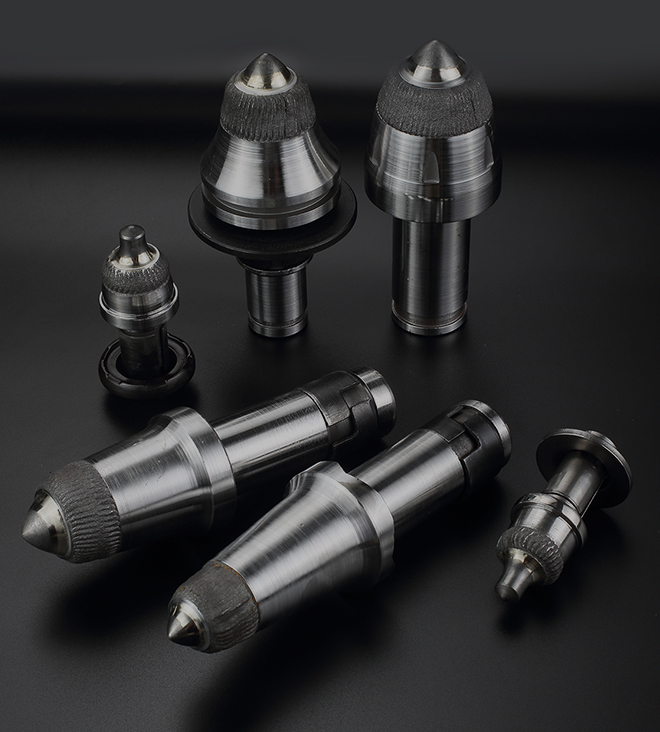
Most cutting pick failure is not a carbide problem. In abrasive rock, siliceous aggregate and recycled concrete, the alloy steel body behind the tip erodes first, the carbide loses its supporting shoulder, and the whole pick is retired with usable tungsten carbide still in the seat. This guide is written for mining, tunnelling, road milling and trenching operators who want to read their scrap pile properly, identify which component is actually limiting service life, and turn that diagnosis into a pick specification. It covers the four failure modes, a 15-minute scrap audit, how silica content changes the answer, a process comparison, a cost-per-metre model, and a five-step checklist to send with your next enquiry.

Hengpu laser cladding ceramic metal milling picks extend service life by up to 50%. Metallurgical-bond ceramic coating prevents early body wear and carbide tip loss. Cut downtime and cost per metre. Small trial orders available for onsite validation.
Why road‑milling picks fail: The steel body wears long before carbide tip is goneA laser‑printed ceramic wear layer solves asynchronous wear for cold planers & cold recyclers — so carbide tips get fully consumed before picks are discarded.01 The Hidden Cost of Premature Pick Replacement on Road‑Jobs
Tired of premature pick failure and high replacement costs? Discover how Hengpu Laser's proprietary 3D laser cladding wear-resistant technology maximizes tungsten carbide usage and extends service life by up to 50% in mining, piling, road milling, and tunneling. Visit us at bauma CHINA 2026 (SNIEC Hall E1.160) to slash your operating costs!