

Views: 0 Author: Site Editor Publish Time: 2026-08-14 Origin: Site


Cold milling stands as one of the most critical processes in pavement‑maintenance engineering. The performance of a milling machine ultimately hinges on its cutting assembly: milling drum, holders and picks. When calculating project costs, many contractors focus heavily on machine acquisition, fuel and labour expenses, yet overlook substantial hidden overhead triggered by cutting‑system consumables. As core machine parts, holders and milling drums define key quality indicators including milling‑surface flatness and cutting‑depth consistency, while accounting for the majority of daily operational expenditure. Across domestic and overseas job‑sites, units of identical milling‑machine models operating under comparable ground conditions frequently exhibit 30%‑60% variance in consumable consumption. Excluding variables such as pavement‑aggregate hardness and operator‑parameter settings, the matching condition among picks, washers and holders constitutes the primary driver behind such cost divergence.

The industry faces an unavoidable market reality: pick raw‑material prices have reached historic highs. Supply‑chain volatility for hard alloys and special steels has driven up unit prices of road‑milling picks. Engineering contractors are caught in a dilemma: low‑cost conventional picks wear rapidly and trigger frequent downtime for replacement, incurring extra labour and schedule‑loss costs; premium OEM picks bring heavy budget pressure due to high unit prices. Field‑project data consistently proves that competing purely on unit price is misleading. Authentic cost‑saving targets the comprehensive cost per square‑metre milled, encompassing pick consumption, holder degradation, replacement labour and downtime losses. Fixating solely on pick unit price while ignoring costly premature holder failure often results in the paradox of “low acquisition cost yet high operating expense”.
Holder failure represents a largely under‑recognized major cost driver for construction teams. During milling operations, picks must maintain steady rotation within holders to guarantee even wear of hard‑alloy tips. Once rotation is impeded, picks develop eccentric, accelerated wear. Not only is pick service life drastically shortened, but lateral impact forces continuously abrade holder contact faces and inner bores, causing surface wear and bore ovalisation. Severely degraded holders lose stable pick‑gripping capacity, amplifying vibration and creating a self‑reinforcing failure loop that leads to premature holder retirement. Replacing dozens of holders on one milling drum generates substantial expenditure for components, welding and disassembly‑assembly labour.
Statistics on field‑failure cases identify two primary holder‑wear modes: frictional wear induced by normal washer rotation, and destructive abrasive wear caused by lateral washer translation. The latter infars far greater damage to holder surfaces. When washers shift sideways against holder end‑faces, they act like grinding wheels, etching grooves and depressions and drastically shortening holder service life. Many field crews attribute holder damage exclusively to harsh ground conditions, ignoring the fact that unconstrained lateral washer displacement — stemming from the absence of locating‑guide structures — frequently acts as the underlying root cause.
Ningbo Hengpu Laser Technology Co., Ltd. specialises in R&D and manufacturing of engineering wear‑resistant consumables with proprietary cermet laser‑cladding technology. Breaking away from the conventional paradigm that reinforces only hard‑alloy tips, Hengpu optimises both pick‑body wear resistance and system‑level component compatibility. Hengpu road‑milling picks feature full interchangeability with OEM holders. No modification to existing milling drums is required; units can be fitted directly onto machines. They deliver high‑efficiency milling while lowering overall operational expenditure for more professional and cost‑effective milling workflows.
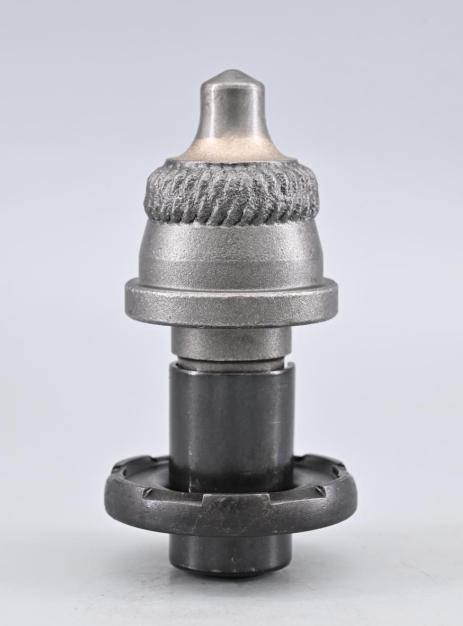 |  |
Unlike conventional picks built merely from steel substrates plus hard‑alloy tips, Hengpu applies cermet laser‑cladding onto high‑stress wear zones of road‑milling picks. Laser cladding creates metallurgical bonding: high‑energy laser beams fuse cermet composite powder firmly onto pick‑substrate surfaces. The cladding layer fuses integrally with base metal, eliminating peeling and delamination risks commonly seen with thermal‑spraying or conventional hard‑facing. Cermet composite phases deliver high hardness and outstanding abrasive‑wear resistance. When working with highly abrasive conditions such as basalt aggregates in asphalt pavements and cement‑stabilised layers, the cladding mitigates plough‑type abrasive wear and slows pick‑body degradation. It preserves dimensional stability required for reliable pick rotation.
Rapid deformation of ordinary pick bodies under heavy friction distorts washer‑loading geometry and further aggravates lateral washer movement. This triggers a vicious cycle: pick degradation → washer misalignment → holder damage → accelerated pick failure. Hengpu’s cermet‑cladding significantly improves pick‑body wear performance and preserves dimensional integrity, furnishing stable support for washers and mitigating abnormal system‑level operating conditions from the source. Laboratory validation plus job‑site field tests confirm that cermet‑clad picks deliver markedly enhanced wear performance versus standard picks of equivalent specification under identical working conditions. They retard plastic deformation, reduce eccentric‑wear probability and unlock the full cutting potential of each individual pick.
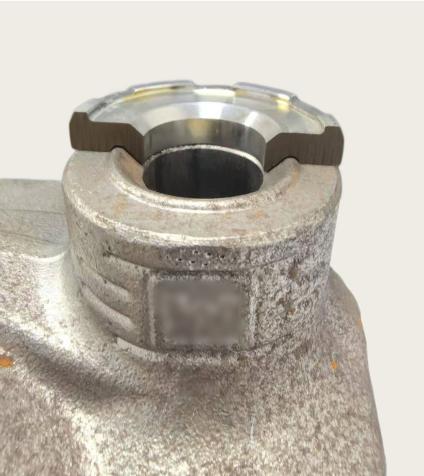
High‑performance picks alone cannot deliver maximum performance. As critical transition components positioned between picks and holders, washers are chronically underestimated on‑site. Reusing aged, deformed washers during pick replacement invalidates locating functions and degrades overall assembly performance. Hengpu’s custom‑engineered washers with integrated guide rings are precisely matched to OEM quick‑change HT22 holders. This combined solution resolves the industry‑wide pain point of lateral washer translation. The guide‑ring structure physically constrains washers, permitting only functional rotational movement while eliminating destructive lateral translation and preventing abrasive damage to holder contact surfaces.
Multiple comparative field tests verify that pairing Hengpu guided washers with OEM‑spec HT22 holders extends holder service life by up to 25%. Full‑lifecycle cost calculation demonstrates approximately $1,400 in comprehensive savings per holder assembly, covering holder procurement, welding‑replacement labour and milling‑drum disassembly‑related downtime. Moreover, this assembly inhibits uneven and premature pick wear, lowers overall pick consumption, reduces pick‑change downtime and drives simultaneous cost reduction and productivity improvement.
One critical technical prerequisite must be emphasised: optimum milling performance is only achievable when Hengpu guided washers are deployed together with qualified OEM‑spec holders. The positioning function of guide rings relies on end‑face geometry and dimensional tolerances conforming to OEM specifications. Where holders already suffer severe pitting, deformation or bore ovalisation, even brand‑new washers and high‑performance picks cannot deliver effective locating, and misalignment plus eccentric wear will persist. This explains many under‑performance field observations: components themselves remain functional, yet mating base parts have exceeded wear limits.
With pick prices sitting at historic highs, every consumable investment demands maximum return. To guarantee stable peak performance and avoid premature pick retirement before end‑of‑life, Hengpu strongly recommends pairing high‑performance picks with qualified OEM‑spec holders. A pervasive field practice permits continued holder service so long as complete fracture does not occur, disregarding subtle end‑face abrasion and minor bore deformation. Micro‑deformation invisible to naked eyes disrupts the pick‑washer‑holder fitment, preventing cermet‑clad picks from realising full capability and causing costly premature failure.
The milling cutting assembly can be analogised to a chain: its strength is defined by its weakest link. Even premium cermet‑clad picks fitted to worn‑out holders will suffer constrained rotation, unilateral overload, abnormal hard‑alloy tip chipping and excessive impact loading on cladding layers, leading to drastically shortened service life. Investing in high‑grade picks yet operating with over‑aged holders amounts to wasted capital.
Drawing on extensive domestic and overseas project experience, we summarise practical on‑site maintenance recommendations for Hengpu cermet‑clad picks to translate hardware advantages into tangible project‑site benefits.
Establish periodic holder‑inspection protocols. Inspect holder‑end‑face grooving and bore ovalisation during bulk pick‑replacement cycles. Replace holders promptly once wear thresholds are exceeded; do not only renew picks while ignoring holder‑condition status.
Avoid washer reuse. Install new matched guided washers concurrently with new picks. Washers are consumable components; friction‑induced deformation degrades guide‑ring functionality, rendering reused washers ineffective for positioning and protection.
Optimise milling parameters according to pavement material. Adjust milling depth and travel speed, and maintain adequate water cooling to mitigate thermal wear and maximise service‑life advantages of cermet‑clad picks.
Conduct regular milling‑drum cleaning. Trapped asphalt and aggregate debris jammed within holder gaps interfere with pick rotation and induce eccentric‑wear failures.
Overseas contractors have widely adopted a consensus: consumable selection should never rely solely on unit‑price quotation. Full‑lifecycle cost accounting is essential. A pick with moderately higher unit cost yet longer service life, holder‑protection capability and reduced downtime frequently delivers far superior net benefit versus low‑cost disposable alternatives. Hengpu’s cermet‑laser‑clad picks plus guided‑washer system is purpose‑built around full‑lifecycle economics. Proprietary cermet‑cladding technology enhances pick‑body abrasion resistance, while integrated‑guide‑ring washers mitigate abnormal holder degradation. The two components work synergistically, compatible with standard OEM HT22 holders without machine modification.
Within the broader pavement‑maintenance sector, technical iteration for consumables no longer focuses merely on improving individual‑component durability. System‑level collaborative optimisation has become the mainstream direction. Traditionally, the industry treated picks purely as throw‑away consumables to be replaced upon failure. Increasingly professional contractors recognise that picks, washers and holders constitute an interconnected assembly. Failure of one component accelerates degradation of mating parts. Integrating material‑surface reinforcement with fitment‑oriented design, Hengpu Laser addresses genuine job‑site pain points rather than pursuing superficial paper‑spec improvements.
Hengpu has built a comprehensive product portfolio covering diverse working conditions. Beyond asphalt‑pavement milling, our cermet‑clad products deliver amplified wear‑resistance advantages for cement‑pavement milling, pavement recycling and highly abrasive hard‑aggregate applications. When conventional picks wear rapidly under harsh abrasive ground and schedule progress suffers from frequent pick‑change stops, Hengpu clad picks extend replacement intervals and cut non‑productive man‑hours. For fleet‑owning rental contractors, aggregated savings from reduced consumable usage and extended holder service life deliver substantial annual economic benefits.
Technical boundaries should also be objectively noted. While cermet laser‑cladding substantially improves wear resistance, it cannot eliminate extreme‑impact damage. Transient heavy shocks from embedded steel rebar or large erratic boulders during milling may still trigger hard‑alloy tip chipping or pick fracture. Rational operational practices and condition assessment remain indispensable. High‑performance consumables magnify operational benefits but do not serve as universal solutions overriding site‑condition constraints.
Returning to prevailing industry conditions: rising pick costs driven by raw‑material inflation represent a universal market challenge. While commodity‑price volatility cannot be reversed, contractors can offset cost pressure via technical‑solution selection, system‑matched assembly and standardised maintenance workflows. Many enterprises instinctively chase lower‑price alternatives for cost‑cutting. Hengpu offers an alternative approach: realise technical upgrading to extend service cycles of wearing parts, reduce replacement frequency, safeguard high‑value capital assets including holders and milling drums, and lower total operational expenses.
Holders and milling drums represent high‑value core assets for milling machines. Their degradation rate is heavily governed by the operating state of picks and washers. Hengpu picks achieve full compatibility with OEM holders to deliver high‑efficiency milling and optimised total expenditure. Hengpu washers with integrated guide‑rings perfectly match OEM quick‑change HT22 holders. Field‑proven to extend holder service life by up to 25%, they deliver considerable full‑lifecycle savings, suppress uneven premature pick wear, reduce consumable consumption and boost job‑site throughput. Realisation of these system‑level benefits depends on deploying guided washers together with qualified OEM‑spec holders. At a time when pick prices remain at record highs, always pair picks with qualified OEM‑spec holders to unlock their full performance potential.

For pavement‑engineering practitioners, equipment and consumable selection ultimately boils down to project profitability. This article aims to help engineering managers move beyond simple unit‑price comparison and adopt a full‑lifecycle‑cost mindset. Understanding the interaction logic of pick‑washer‑holder assemblies empowers stakeholders to leverage advanced technologies such as cermet laser cladding, and strike a balanced trade‑off among construction quality, operational efficiency and project profitability amid volatile market environments.


