


Views: 0 Author: Site Editor Publish Time: 2026-04-07 Origin: Site


Coal mining picks work at the most demanding point of an underground mining machine: the contact area between the cutting head and the coal seam. Their performance affects how force is transferred into the material, how evenly the cutting head operates, and how often the machine must stop for maintenance.
In underground coal mining, a pick may encounter coal, hard inclusions, rock bands, moisture, dust, and abrasive minerals during the same cutting cycle. These conditions place repeated stress on the carbide tip, steel shank, holder, and retaining components.
A poorly selected or damaged pick can increase cutting resistance, create uneven loading, cause abnormal vibration, and accelerate holder wear. In addition to reducing production efficiency, these problems may require unplanned inspection or replacement around the cutting head.
The purpose of a high-performance coal mining pick is therefore not simply to last longer. It should help the cutting system work in a more stable, predictable, and controllable way. Hengpu Laser provides wear-resistant coal mining picks for underground mining machinery for coal cutters and related underground applications.
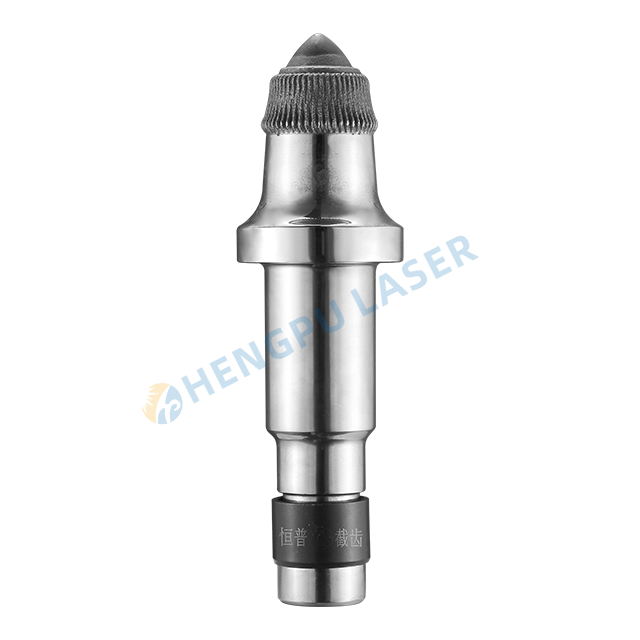
A shearer or continuous miner relies on many picks working together across the cutting head. Each pick carries part of the cutting load. If one pick becomes worn, loose, tilted, or unable to rotate, nearby picks may receive additional force.
This can create a chain reaction. The machine may require more force to remove the same amount of material, while the cutting head experiences greater vibration and uneven loading. At the same time, the damaged pick may place extra stress on its holder or retaining components.
Coal mining picks cannot replace ventilation, gas monitoring, roof control, guarding, or other essential safety systems. Their contribution is mechanical: they help reduce avoidable tool-related instability and make maintenance more predictable.
| Pick problem | Mechanical effect | Safety and efficiency impact |
|---|---|---|
| Worn carbide tip | Higher resistance at the cutting point | Lower cutting output and increased loading |
| Cracked or broken tip | Sudden loss of cutting function | Unexpected maintenance and production interruption |
| Worn steel shank | Reduced support for the tip | Greater risk of tilting or premature failure |
| Blocked rotation | One-sided wear and concentrated friction | Vibration, heat, and holder damage |
| Loose pick | Unstable contact with the coal face | Irregular cutting and possible secondary damage |
For underground operations, predictable wear is valuable because maintenance can be planned before a minor tool problem develops into a larger mechanical failure.
Coal seams are not always uniform. A cutting head may pass through softer coal, harder coal, stone bands, and abrasive material in a short period of time. This variation changes the load applied to each pick.
A pick designed only for low-impact coal may suffer tip cracking when it meets hard rock. A tool with insufficient wear resistance may lose its cutting profile quickly in abrasive conditions. Selecting the correct coal mining pick therefore requires more than confirming the overall machine type.
Operators should consider:
Coal hardness
Presence of rock or stone bands
Abrasiveness of the material
Moisture and dust conditions
Cutting speed and depth
Operating hours
Pick position on the cutterhead
Holder and retaining system
The supplier should also receive the existing pick model, shank dimensions, holder information, and previous failure records. This allows the product to be selected according to the real cutting condition rather than a general application label.
A coal mining pick is a complete load-bearing tool. The carbide tip performs the primary cutting work, while the steel shank supports the tip and transfers force from the holder.
Hengpu Laser coal mining picks combine a tungsten carbide alloy tip with a high-strength 42CrMo steel shank. The shank undergoes a quenching process to improve its durability under repeated impact and loading.
The carbide tip must resist direct abrasion and impact. The shank must withstand bending, vibration, and repeated force transfer. The body beneath the tip must remain strong enough to support the carbide during cutting.
This relationship is important because the carbide tip is not always the first part to fail. In abrasive conditions, the steel body beneath the tip may wear heavily while the carbide still appears usable. Once support is reduced, the tip may tilt or receive an uneven impact load.
A reliable design must therefore balance hardness, toughness, impact resistance, body protection, and dimensional accuracy.
Selected Hengpu Laser coal mining picks use a 3D laser-printed ceramic wear-resistant layer to protect high-wear areas of the metal body.
This layer is intended to address wear around the body and transition area beneath the carbide tip. Protecting these areas can help maintain the tip’s support and delay deformation during repeated cutting.
The potential benefits include:
Reduced abrasion on the steel body
More stable support for the carbide tip
Better resistance in abrasive coal and rock
Lower risk of premature body failure
More predictable replacement planning
Hengpu Laser describes this technology as a metal-ceramic structure that combines ceramic wear resistance with the toughness of a metal substrate. This balance is useful in coal mining because the tool must handle both continuous friction and sudden impact.
The wear-resistant layer should still be selected according to the specific pick model, holder system, equipment condition, and geological environment. It is part of a complete tool design rather than a substitute for correct installation and maintenance.
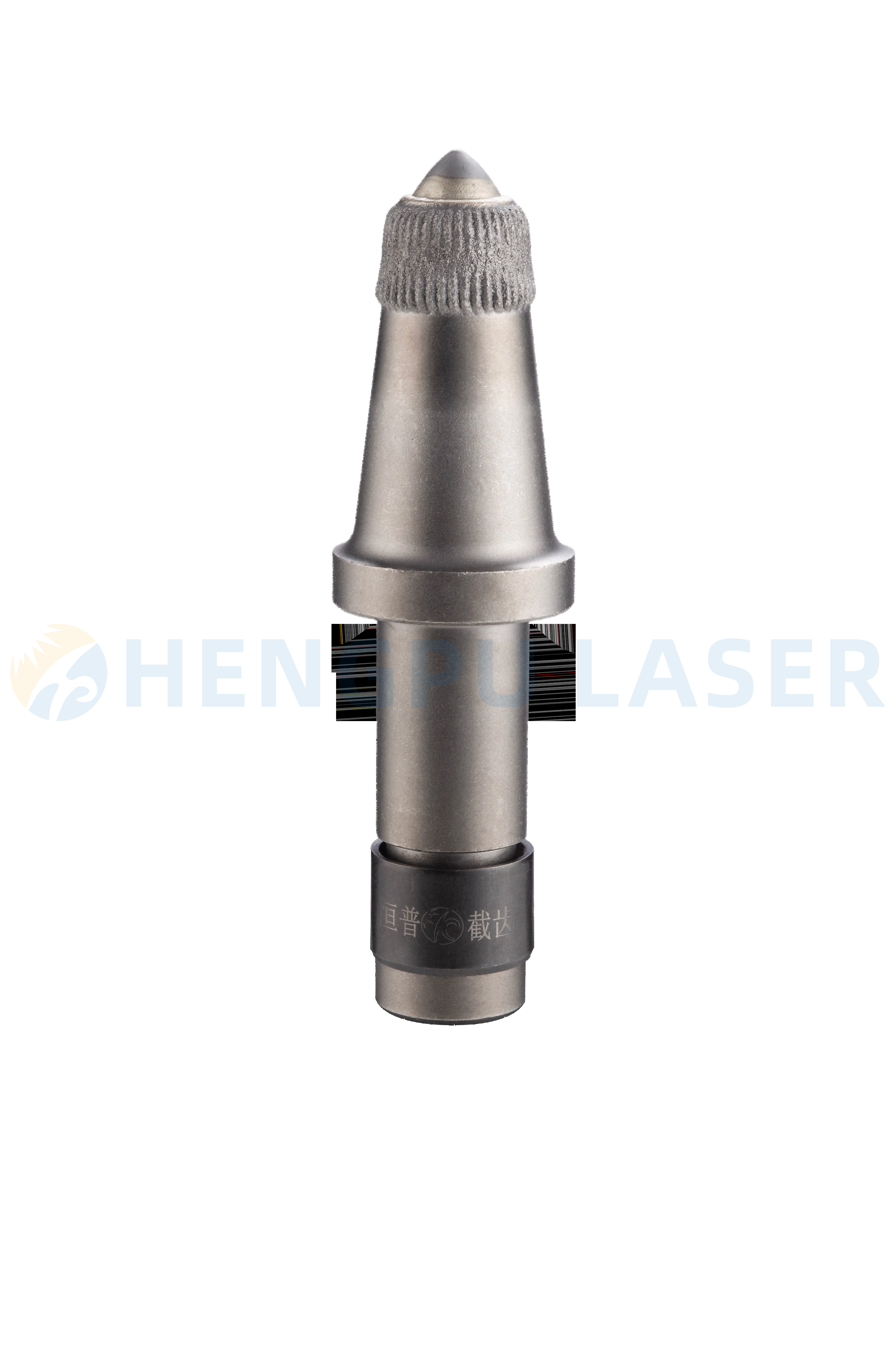
Many round-shank coal mining picks are designed to rotate inside the holder. Rotation helps distribute wear around the pick and prevents one side of the carbide tip from remaining under constant cutting pressure.
However, rotation can be restricted by coal dust, material buildup, corrosion, holder deformation, excessive internal wear, or incorrect retaining components. A pick that cannot rotate may develop rapid one-sided wear and transmit additional force to the holder.
During inspection, the pick should not be checked separately from the holder. Maintenance teams should confirm that:
The pick is seated correctly
The pick rotates as intended
The holder is not deformed
The retaining ring is correctly installed
Material has not accumulated around the holder
Nearby picks do not show similar abnormal wear
If one cutterhead position repeatedly causes pick failure, the cause may be related to local loading, holder alignment, pick arrangement, or a change in the coal seam. Replacing the pick alone may not correct the problem.
A suitable coal mining pick can support efficiency in several ways. More stable cutting helps the machine maintain a consistent working pattern. Better body protection can reduce early replacement. Correct rotation can distribute wear and help protect the holder.
The practical result may include:
Fewer unexpected tool changes
Lower maintenance labor
More consistent cutting performance
Reduced holder and cutterhead damage
Better equipment utilization
More predictable production planning
The value of a pick should be measured against actual output rather than unit price alone. Useful measurements include picks consumed per shift, picks used per ton of coal, emergency replacement frequency, downtime, and holder replacement.
| Performance indicator | What it helps evaluate |
|---|---|
| Picks per shift | Daily tool consumption |
| Picks per ton of coal | Relationship between tool use and production |
| Emergency replacement time | Maintenance disruption |
| Holder damage frequency | Effect of pick stability on the cutting system |
| Vibration and noise changes | Possible abnormal loading |
| Operating hours between replacements | Predictability of tool life |
This data helps operators identify whether a problem comes from the pick, holder, machine settings, or geological conditions.
Hengpu Laser offers coal mining pick models including the HPU47, HPU82, HPU84, HPU85, HPU92, HPU95, and HPU170 series. Different models are available for different shank sizes, lengths, pick positions, and equipment requirements.
The selection process should confirm the following information:
| Selection factor | Why it matters |
|---|---|
| Machine type | Determines loading and cutting pattern |
| Holder dimensions | Ensures correct fitment and retention |
| Shank diameter and length | Affects installation and force transfer |
| Coal and rock condition | Determines wear and impact requirements |
| Pick position | Influences the load applied to the tool |
| Maintenance access | Affects the importance of predictable wear |
This application-based approach is more reliable than selecting a pick only by appearance or general product name.
Hengpu Laser focuses on wear-resistant engineering components and laser-based ceramic 3D-printing technology for mining excavation and infrastructure applications.
Its coal mining picks combine tungsten carbide alloy tips, high-strength 42CrMo steel shanks, heat treatment, and selected ceramic wear-resistant layers. The company also supports customized product selection based on equipment specifications and working conditions.
Customers can provide machine information, holder dimensions, pick size, geological conditions, operating hours, and previous failure patterns for technical evaluation.
More information is available through the Hengpu Laser cutting picks product range.
They can help maintain stable cutting, reduce abnormal vibration, limit holder damage, and make maintenance more predictable. They do not replace essential mine safety systems.
Common causes include severe abrasion, hard rock inclusions, carbide cracking, shank wear, blocked rotation, damaged holders, incorrect retention, and unsuitable cutting parameters.
Rotation helps distribute wear around the pick and maintain a stable cutting angle. Restricted rotation can cause one-sided wear and increase holder loading.
Performance should be evaluated through tool consumption, coal output, replacement frequency, downtime, holder wear, and maintenance labor rather than unit price alone.
Coal mining picks support safer and more efficient coal mining by improving the stability of the cutting interface. Their performance affects cutting resistance, vibration, coal fragmentation, holder loading, tool consumption, and maintenance requirements.
The most suitable pick is not necessarily the hardest or cheapest option. It is the product that matches the mining machine, holder, coal seam, surrounding rock, impact level, and maintenance plan.
Through tungsten carbide tips, high-strength steel shanks, application-specific configurations, and selected laser-printed ceramic wear protection, Hengpu Laser provides coal mining pick solutions designed for demanding underground operations.


