


Views: 0 Author: Site Editor Publish Time: 2026-04-02 Origin: Site


Modern tunnel excavation is no longer judged only by how quickly a machine removes rock. Project quality also depends on profile accuracy, energy control, geological adaptability, and the ability to maintain stable excavation conditions over long working periods.
Roadheaders support this development through continuous mechanical cutting. Unlike traditional blasting methods, a roadheader can remove rock progressively while allowing operators to control the excavation area. However, this capability depends heavily on the cutting picks installed on the cutterhead.
Roadheader picks determine how the machine interacts with the rock face. Their geometry, arrangement, strength, and wear behavior affect crack formation, cutting resistance, vibration, and the final tunnel profile. As a result, pick development has become part of the wider technological improvement of tunnel excavation equipment.
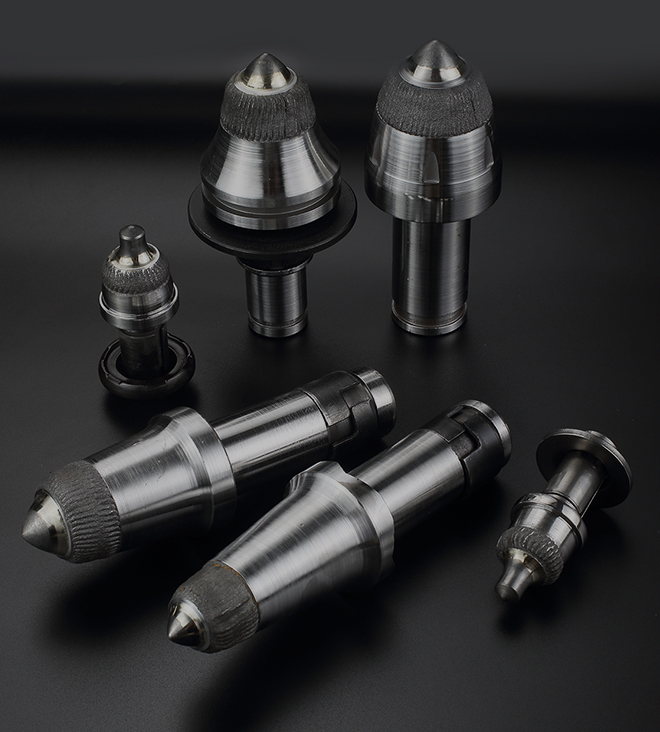
Roadheader picks influence the relationship between cutterhead movement, rock fracture, and excavation accuracy.
A roadheader works through the combined action of cutterhead rotation and machine thrust. The picks do not simply scrape material from the rock face. They create and extend cracks, allowing the machine to break the rock through repeated cutting and compression.
This means pick performance affects three connected stages:
| Excavation stage | Role of the roadheader pick | Result |
|---|---|---|
| Initial contact | Enters the rock at a controlled angle | Lower resistance and more effective penetration |
| Crack formation | Transfers force into the surrounding material | More predictable rock fragmentation |
| Material removal | Separates broken rock from the face | Improved cutting flow and reduced rework |
When these stages remain stable, the operator has greater control over the excavation process. The pick becomes part of the machine’s cutting strategy rather than an isolated consumable.
One of the most important advances is the improved use of machine power.
Roadheaders generate substantial torque and thrust, but not all of that energy contributes directly to excavation. If a pick slides, rubs, or strikes the rock at an unsuitable angle, a portion of the energy is converted into heat, vibration, and mechanical stress.
A suitable roadheader pick helps concentrate force at the intended cutting point. This encourages the rock to fracture instead of resisting through continuous surface contact.
The practical effects may include:
More effective penetration into the rock face
Lower unnecessary friction
More stable motor loading
Better use of available cutting power
Improved advance performance in demanding formations
The objective is not simply to increase machine speed. It is to obtain more useful excavation from each rotation of the cutterhead.
Tunnel profile control is a major difference between basic rock removal and modern excavation technology.
The cutterhead must remove enough material to create the required section without producing excessive overbreak. If the cutting pattern becomes irregular, the tunnel may require additional trimming, support adjustment, or lining correction.
Roadheader picks support profile control in several ways:
Maintaining the designed cutting radius
Supporting consistent pick spacing and engagement
Reducing irregular impact on the cutterhead
Helping the operator respond to changing rock conditions
Limiting unnecessary cutting outside the planned boundary
This is particularly important in subway tunnels, transport tunnels, mine roadways, water diversion projects, and municipal underground construction.
A correctly selected pick cannot replace operator control or machine guidance. However, it provides a more consistent mechanical response, which makes accurate excavation easier to achieve.
In precision tunneling, the value of a roadheader pick is measured not only by how much rock it removes, but also by how accurately it removes it.
Tunnel geology can change within a short distance. A roadheader may encounter soft rock, abrasive formations, fractured zones, or hard inclusions during the same project.
These conditions do not place the same load on a pick. Hard rock increases cutting resistance, while fractured rock may create sudden impact and bending forces. Abrasive material can gradually change the tip shape and reduce cutting effectiveness.
This is why roadheader picks should be selected according to the geological profile rather than by machine model alone.
| Geological condition | Main operating issue | Design priority |
|---|---|---|
| Soft or medium rock | Excessive penetration may reduce control | Suitable cutting angle and geometry |
| Hard rock | High torque and thrust demand | Strong tip and stable shank |
| Abrasive rock | Rapid loss of cutting shape | Improved wear resistance |
| Fractured ground | Irregular impact and shock | Crack resistance and toughness |
| Mixed formations | Frequent load changes | Balanced hardness and toughness |
This application-based approach allows the cutting system to be adjusted as conditions change. It also supports more accurate planning of pick consumption and maintenance requirements for different tunnel sections.
Roadheaders have helped expand the use of mechanical excavation in projects where controlled cutting is preferred.
In urban construction, subway work, and utility tunnels, blasting may be restricted because of vibration, surrounding structures, environmental requirements, or project location. A roadheader can remove material progressively and direct the cutting action toward the required area.
Roadheader picks contribute to this process by supporting:
Localized rock removal
Controlled excavation boundaries
Lower dependence on blasting
Better coordination with support work
More predictable excavation stages
The final result depends on the entire system, including machine settings, geological conditions, dust control, ventilation, support design, and operator experience. The picks are one important part of this mechanical excavation method.
Modern tunnel projects increasingly rely on operating data to improve decision-making. Roadheader pick performance can be evaluated through practical indicators rather than general claims about hardness or service life.
Useful measurements include:
Advance distance per shift
Cutting load in different geological zones
Pick consumption per excavation meter
Profile correction volume
Frequency of abnormal cutterhead vibration
Time required for inspection and replacement
Holder or cutterhead damage
These measurements help engineers identify whether a pick is suitable for the actual project. For example, a pick may show good wear resistance but still perform poorly if it creates excessive cutting resistance. Another model may offer a better balance between penetration, stability, and maintenance.
This is a shift from choosing tools by purchase price to evaluating their contribution to the entire excavation process.
Roadheader picks need a carefully controlled combination of materials and geometry.
The carbide tip must maintain hardness during contact with abrasive rock. The steel shank must tolerate repeated impact and bending. The connection between the two parts must remain stable under high-frequency loading.
Hengpu Laser’s roadheader pick products combine tungsten carbide alloy tips with high-strength steel shanks and heat-treatment processes. Selected products also use laser-printed ceramic wear-resistant technology for demanding working conditions.
The official product range includes HPS135D, HPS260, and HPS360 series picks. Different models are available with different dimensions and mounting specifications, so the shank diameter, length, retaining system, and cutterhead structure should be confirmed before selection.
More information is available through Hengpu Laser’s official Roadheader Picks product category.

Roadheader pick selection should match the cutterhead, holder, rock condition, and required excavation profile.
Before ordering roadheader picks, project teams should provide the supplier with:
Roadheader model and cutterhead structure
Existing pick model and dimensions
Holder diameter and retaining method
Rock strength and abrasiveness
Presence of fractured or mixed formations
Required tunnel section and profile accuracy
Machine thrust and operating speed
Current pick failure or wear problems
This information allows the supplier to recommend a pick based on actual excavation conditions instead of relying on a general-purpose specification.
They improve the way the roadheader transfers energy into the rock, controls the excavation profile, adapts to geological changes, and maintains predictable cutting performance.
Some models are designed for demanding hard-rock conditions, but the correct choice depends on rock strength, abrasiveness, machine power, and impact level.
Geometry affects penetration angle, crack formation, cutting resistance, and the position of material removal. It therefore influences both excavation efficiency and profile accuracy.
Roadheader picks are helping advance modern tunnel excavation by making mechanical rock cutting more precise, controllable, and adaptable. Their role extends beyond basic material removal. They influence how efficiently the cutterhead uses power, how accurately the tunnel profile is formed, and how well the machine responds to changing geology.
As tunnel projects place greater demands on non-blasting excavation, profile control, and measurable operating performance, roadheader picks are becoming an important part of complete excavation-system design. The best results come from matching pick geometry, materials, dimensions, and mounting conditions to the roadheader and the actual rock formation.


