


Views: 0 Author: Site Editor Publish Time: 2026-03-26 Origin: Site


In mining and construction, equipment downtime rarely begins with a major breakdown. It often starts with gradual material loss at a chute, hopper, conveyor transfer point, bucket edge, liner, or other high-contact surface. As the surface becomes thinner or changes shape, the equipment may experience poor material flow, uneven loading, higher impact, or damage to the underlying structure.
Wear parts are designed to interrupt this process before minor surface damage becomes an expensive equipment failure. Wear-resistant strips, blocks, and plates act as replaceable protection for critical areas exposed to abrasion, impact, heat, or material movement.
Their value is therefore not limited to longer component life. Properly selected wear parts help companies preserve equipment geometry, shorten maintenance work, organize replacement schedules, and keep production lines operating for more hours.
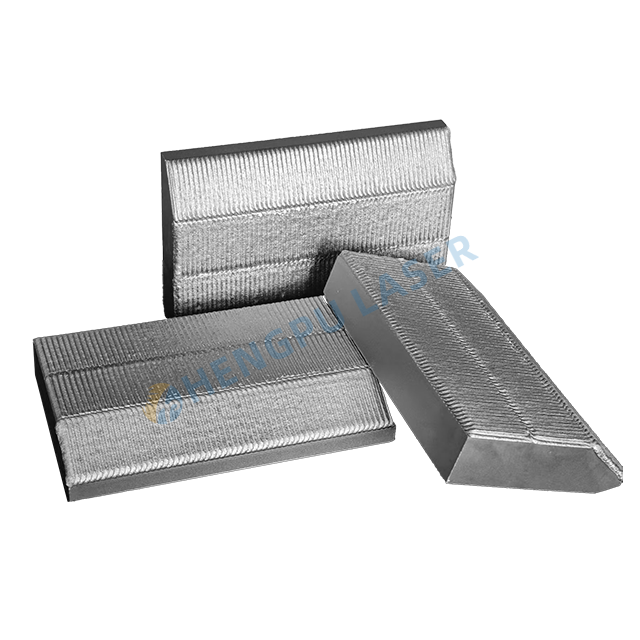
A worn surface can gradually affect several connected parts of a machine. The typical process looks like this:
Material contact → surface wear → geometry change → flow or loading problem → base structure exposure → emergency repair
For example, when a chute lining wears unevenly, material may no longer pass through the chute smoothly. Build-up, blockage, impact concentration, or uncontrolled discharge can follow. If the base steel becomes exposed, the repair may require welding, grinding, structural replacement, and a longer production stoppage.
Wear parts reduce this risk by placing a sacrificial and replaceable layer between the working material and the equipment body.
| Potential problem | How wear parts help |
|---|---|
| Abrasive material removes surface material | A wear-resistant layer receives the contact |
| Impact damages steel structures | Blocks or bars absorb repeated impact |
| Surface geometry changes | Custom profiles help maintain the original shape |
| Base plate becomes exposed | Replaceable protection delays structural damage |
| Emergency repair interrupts production | Modular parts support planned replacement |
The earlier this protection is installed at the correct location, the easier it becomes to control maintenance costs and downtime.
Equipment surfaces are designed with specific angles, clearances, and material paths. Once these dimensions change through wear, the machine may still operate, but its performance can deteriorate.
A chute may discharge material unevenly. A hopper may develop dead zones. A conveyor transfer point may experience additional impact. In construction equipment, a worn cutting edge or bucket section may require more passes to achieve the same result.
Wear plates, wear bars, and shaped blocks help preserve these working surfaces. This allows equipment to maintain more consistent material movement and operating conditions instead of continuing with a gradually distorted structure.
Replacing a wear part is generally more manageable than repairing the main body of a chute, hopper, bucket, frame, or conveyor structure. The protective component is intended to be exposed and replaced when its working layer reaches a specified condition.
This creates a clear maintenance boundary. Operators can inspect the wear component without waiting for the supporting steel to fail. When replacement is needed, the repair is focused on a defined part rather than an entire structural assembly.
For large mining and construction equipment, this distinction is important because structural repairs may involve access restrictions, lifting operations, welding, alignment checks, and extended testing.
Unplanned downtime is costly because the repair occurs at the least convenient moment. Production may stop before replacement materials, labor, tools, or lifting equipment are ready.
A wear-part program provides a more predictable maintenance process. Teams can record inspection findings, estimate remaining usable material, prepare replacement parts, and schedule the work during a planned service window.
This approach also supports spare-parts management. Instead of storing complete replacement assemblies, a site may prepare commonly used wear strips, blocks, or plates for critical equipment zones.
Wear is often concentrated in specific areas rather than distributed evenly across the entire machine. These areas may include impact points, turning sections, discharge openings, corners, and edges.
Installing targeted protection at these locations helps prevent a small damaged zone from spreading into adjacent surfaces. Custom wear components can be positioned where the material strikes, slides, turns, or accumulates most aggressively.
This is especially useful when the cost of replacing an entire lining system is high but only a few sections experience severe wear.
A wear part should not be selected only by its name or material hardness. The working condition is equally important.
| Working condition | Typical concern | Suitable design focus |
|---|---|---|
| Sliding abrasion | Continuous material rubbing removes the surface | Wear-resistant plates or strips with stable coverage |
| Heavy impact | Large rocks or aggregates strike repeatedly | Tough wear blocks or impact-resistant composite sections |
| High-temperature material | Heat weakens conventional protection | High-temperature wear bars for chutes, hoppers, or slag handling |
| Concentrated contact | Damage occurs along edges or narrow zones | Localized bars, strips, or shaped blocks |
| Irregular material path | Uneven loading creates different wear rates | 3D grooves, bosses, or customized surface geometry |
Mining equipment may handle ore, rock, and overburden, while construction machinery may encounter abrasive soil, gravel, concrete debris, or mixed ground. The correct solution depends on the material, impact energy, contact direction, operating temperature, and available installation space.
A thick plate is not automatically the best wear solution. If its shape does not match the contact area, some sections may wear too quickly while other sections contribute little protection.
Customized geometry helps place protection where it is most needed. Depending on the application, wear parts may be produced as strips, blocks, or plates with selected dimensions and welding bevels. Three-dimensional bosses and groove structures can also help distribute contact across the working surface.
HPLaserTech’s metal-ceramic composite technology combines a steel matrix with advanced ceramic materials such as tungsten carbide, aluminum oxide, zirconia, silicon carbide, and other ceramic options. The ceramic layer thickness can be customized according to the working condition, with product information indicating layers of up to 5 mm for applicable designs.
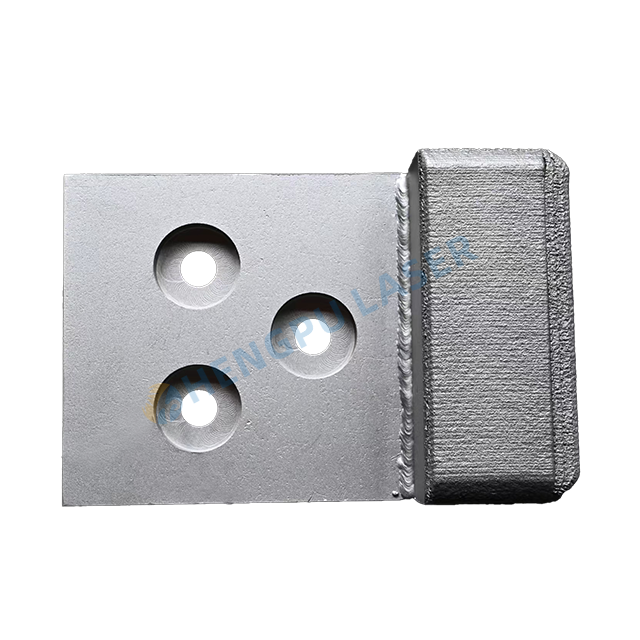
The objective is not simply to create the hardest possible surface. The wear component must also remain suitable for impact, welding, installation, and the structural requirements of the equipment.
Before ordering wear parts, the maintenance or engineering team should review:
The exact equipment section requiring protection
The type and size of material being handled
Whether the dominant action is sliding, impact, erosion, or heat
The direction and concentration of material contact
The current wear pattern and remaining base thickness
Available installation and welding space
The time normally required for replacement
Previous failure points and maintenance records
Whether the component should be a strip, block, plate, or custom profile
Photographs, drawings, dimensions, operating data, and used-part samples can help the supplier develop a more accurate solution.
Wear parts should be evaluated through operating results, not only visual appearance. Useful indicators include:
| KPI | What it shows |
|---|---|
| Unplanned stoppage hours | Whether unexpected failures are decreasing |
| Replacement interval | Whether maintenance is becoming more predictable |
| Repair labor time | Whether the damaged area is easier to service |
| Base-structure repairs | Whether the main equipment body is better protected |
| Throughput interruptions | Whether material flow remains more stable |
| Cost per operating hour | Whether the protection is economically effective |
A successful wear-part strategy should make failures easier to predict and repairs easier to organize. Even when a wear part itself requires replacement, the overall maintenance event can be shorter and less disruptive than repairing the protected equipment structure.
Wear parts are used in many high-wear equipment areas, including mining loading and conveying systems, construction and earthmoving machinery, petroleum equipment, rail transit components, and metallurgical chutes or hoppers.
In mining, customized profiles can help protect material-handling surfaces and support more uniform wear. In construction and earthmoving, wear blocks can shield equipment working in abrasive soil or mixed ground. In metallurgy, high-temperature wear bars can protect areas exposed to hot material and slag.
The common principle is the same: protect the surface most likely to fail, make that protection replaceable, and prevent localized wear from becoming a larger equipment shutdown.
HPLaserTech provides customized wear-resistant strips, blocks, and plates for mining, petroleum extraction, construction, rail transit, metallurgy, and machinery manufacturing.
Its 3D ceramic laser-printed tungsten carbide and steel wear plates and bars are designed for applications where both wear resistance and impact performance are important.
Through customized dimensions, surface structures, welding bevels, ceramic layer selection, and technical evaluation, wear protection can be matched more closely to the equipment’s actual failure points.
Q: Do wear parts eliminate equipment downtime completely?
No. They are designed to reduce wear-related failures and make maintenance more predictable. Other issues such as electrical faults, hydraulic problems, operator error, and major structural damage may still cause downtime.
Q: Is the hardest wear material always the best option?
Not necessarily. A wear part must balance hardness, toughness, impact resistance, installation requirements, and the actual material-handling condition.
Q: What information should be sent to a supplier?
Equipment drawings, wear location, dimensions, material type, impact level, operating temperature, photographs, and previous maintenance records are useful for selecting or designing the right wear part.
Wear parts reduce downtime by protecting the surfaces where mining and construction equipment experiences the greatest contact, impact, and abrasion. They preserve equipment geometry, shield expensive base structures, limit the spread of localized damage, and help convert emergency repairs into planned maintenance.
The most effective solution is not simply a thicker or harder component. It is a wear part designed around the actual failure mechanism, installation conditions, and maintenance schedule. When correctly selected and monitored, wear-resistant plates, bars, strips, and blocks can help mining and construction companies keep critical equipment productive for longer periods.


