

Views: 0 Author: Site Editor Publish Time: 2026-09-01 Origin: Site


Unpredictable cutting tool failure brings compounding losses to any heavy-duty operation. Machine downtime rapidly halts your production schedules. Increased labor costs quickly drain your project budgets. Accelerated wear on heavy machinery creates long-term financial burdens. Equipment like continuous miners, roadheaders, and trenchers rely entirely on tool integrity. Without durable cutting elements, these massive machines become useless.
You must shift away from a simple unit-cost purchasing mindset. True operational success requires evaluating the entire lifecycle value of your tooling. Understanding the specific variables dictating tool longevity remains absolutely critical. Poor tool selection leads directly to unnecessary mechanical stress. It also forces maintenance crews into endless reactive repair cycles.
This article provides an evidence-based breakdown of tool performance factors. We will explore the metallurgical, environmental, and operational elements at play. You will discover exactly how these physical realities impact daily extraction rates. We designed this guide to help procurement and engineering teams confidently evaluate their next tooling upgrade.
Tool life is rarely dictated by a single variable; it is a calculated balance between the tungsten carbide tip, the steel body, and the brazing joint integrity.
Upgrading to specific geometries, such as Round-Shank Cutting Picks, combined with advanced surface treatments, can directly lower overall costs in high-abrasion environments.
Operational parameters (cutting speed, feed rate, cooling efficiency) must be precisely matched to geological realities (rock hardness and abrasiveness) to prevent premature thermal or mechanical failure.
Evaluating vendors requires looking beyond standard spec sheets to assess manufacturing consistency, specifically in heat treatment and wear-resistant cladding.
You must differentiate between normal abrasive wear and catastrophic tool failure. Normal wear happens gradually and predictably over time. Catastrophic failure involves immediate tip loss or sudden shank snapping. The hidden costs of these sudden failures remain severe. A shattered tool immediately stops the machine. Idle crews wait while maintenance personnel replace the broken parts.
Missing teeth create severe drum imbalance during operation. This imbalance sends violent vibrations straight into the machine gearbox. Gearbox repairs cost exponentially more than replacement tools. These hidden mechanical damages destroy profit margins quickly.
You need strict standard evaluation criteria for all cutting tools. Never evaluate success based simply on the initial purchase price. Track the exact meters milled per pick. Calculate the total tons extracted before replacement becomes necessary. Observe the consistency of wear patterns across the entire cutter head.
Consistent wear indicates a well-balanced cutting operation. Uneven wear suggests problems with drum lacing or operator technique. Track tool retention rates closely. High retention means your tools stay firmly seated inside their blocks.
Standardized, lower-cost picks often fail surprisingly early. They struggle heavily in complex or mixed geological strata. Commodity tools lack the refined metallurgy needed for extreme impacts. This forces your operations into constant reactive maintenance cycles.
Cheap tools wear down fast, reducing your cutting efficiency. Dull tools require the machine to push harder against the rock face. This excessive pushing wastes fuel and strains hydraulic systems. Investing in quality upfront prevents these cascading operational failures.
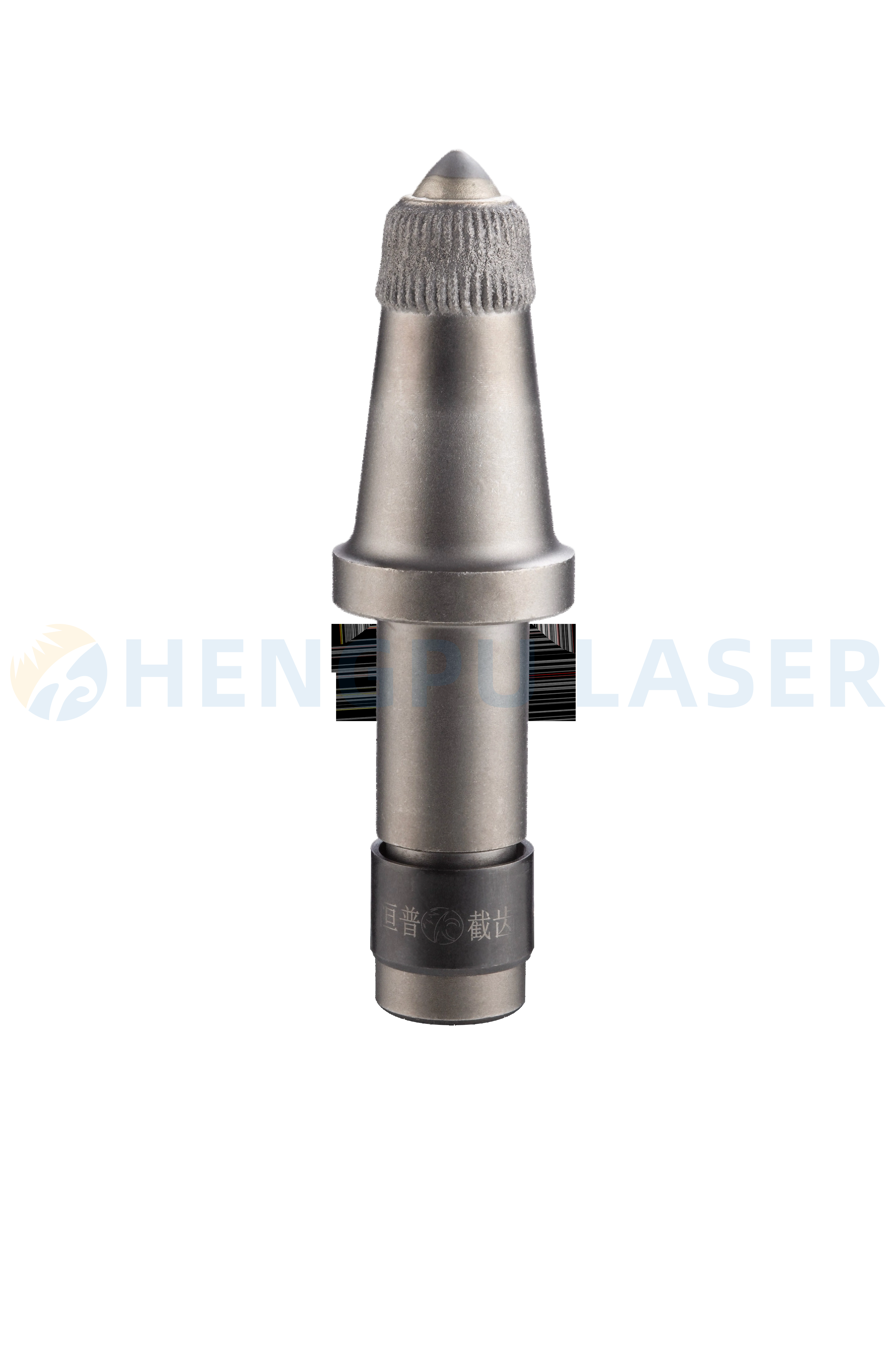
You must assess the grain size and cobalt binder ratio closely. The carbide tip relies entirely on this specific chemical mixture. Cobalt acts as a ductile matrix holding the brittle carbide together. Coarser tungsten grains offer much better impact resistance. They absorb severe mechanical shocks during hard rock encounters.
Finer grains provide superior continuous wear resistance. They hold their sharp edge against highly abrasive scraping. You must match the carbide grade to the rock hardness directly. Engineers measure this hardness using Unconfined Compressive Strength (UCS). Upgrading to premium Tungsten Carbide Cutting Picks requires exact material matching.
The steel shank alloy plays a deeply critical role. Reputable manufacturers often specify high-strength 42CrMo steel. The specific heat treatment process dictates its ultimate tensile strength. Proper tempering prevents the shank from becoming overly brittle.
You must evaluate the brazing shear strength carefully. A premium carbide tip remains useless if its brazing fails. Manufacturers use silver or copper-based alloys for this joint. High-frequency induction brazing ensures a solid, void-free bond. Thermal shock or mechanical impact easily destroys weak brazed joints.
Tool geometry directly dictates your mechanical advantage in the field. The specific profile of Round-Shank Cutting Picks allows them to rotate freely. This continuous rotation ensures self-sharpening during heavy operation. It also guarantees completely even wear distribution across the tool body.
If a tool fails to rotate, it wears flat on one side. We call this flat-spotting, and it ruins cutting efficiency immediately. Good geometry includes proper clearance angles. These angles reduce friction between the steel body and the rock face.
Table: Carbide Grain Size and Application Matrix
Carbide Grain Size | Impact Resistance | Wear Resistance | Ideal Geological Application |
|---|---|---|---|
Fine (0.8 - 1.2 µm) | Low | High | Highly abrasive, uniform sandstone |
Medium (1.3 - 2.5 µm) | Moderate | Moderate | Mixed strata, general coal mining |
Coarse (2.6 - 5.0 µm) | High | Low | High-impact, fractured hard rock |
Traditional induction hardening only goes so far today. Hard rock environments quickly erode standard hardened steel. Advanced surface treatments mitigate wash-wear much better. Hardfacing applies a protective wear layer over the vulnerable steel body.
Weld-deposited hardfacing provides decent protection for moderate conditions. However, it can sometimes introduce unwanted heat stress into the base metal. You need advanced surface engineering for truly extreme mining conditions.
Laser cladding represents a massive leap in tool protection. This process creates a precise melt pool on the substrate. Tungsten carbide powder is injected directly into this molten pool. It bonds a high-density alloy layer perfectly to the pick body.
This process never alters the base steel's underlying structural integrity. The heat-affected zone remains incredibly small. Laser-Clad Wear-Resistant Cutting Picks require a noticeably higher upfront investment. However, field data proves they extend service life significantly.
They excel specifically in highly abrasive conditions like quartz-rich sandstone. The lifecycle savings quickly offset the initial purchase price.
This specialized cladding prevents early head wash completely. Head wash happens when base steel wears much faster than the tip. The softer steel erodes away, leaving the carbide insert unsupported. This structural imbalance inevitably leads to premature tip loss.
Once the tip falls out, the bare steel shank hits the rock. The tool generates massive sparks and cuts nothing. Laser cladding maintains the steel profile directly behind the tip. This ensures the carbide remains fully supported until it wears out naturally.
Rock abrasiveness largely dictates the specific failure mode you will see. Engineers measure this abrasiveness using the Cerchar Abrasivity Index (CAI). High CAI values mean the rock will act like sandpaper. Material hardness alone does not tell the whole story.
Mixed-face conditions introduce severe and sudden shock loads. Cutting through soft coal into a hard rock intrusion jars the machine violently. You must prepare your equipment for these sudden, violent impacts. Selecting a versatile carbide grade helps manage mixed-strata unpredictability.
Cutting speed and tool life share a strict inverse relationship. Excessive drum speed generates extreme friction instantly. This intense friction leads to rapid thermal degradation of the tools. You must find the optimal depth of cut for your machine.
A proper depth maximizes your effective breakout force. The tools should fracture the rock in large chunks. Shallow cuts merely grind the rock into fine dust. Grinding simultaneously maximizes localized stress on individual Cutting Picks.
Rapid heating and cooling cycles cause severe thermal cracking. Carbide tips are highly vulnerable to these sudden temperature fluctuations. A dull tool generates massive heat through friction. When cooling water hits this superheated carbide, it cracks instantly.
Optimized water spray systems remain an absolute necessity underground. They lubricate the cut and suppress harmful dust efficiently. Most importantly, they stabilize the tool temperature during heavy, continuous use. Properly directed spray nozzles ensure the water actually reaches the cutting zone.
Look closely at a manufacturer's internal quality control data. Reputable suppliers happily share their testing methodologies with buyers. Demand to see ultrasonic testing results for braze joints. Ultrasonic waves reveal hidden voids or cracks inside the brazement.
Review their hardness testing reports before making bulk purchases. Consistent hardness across a batch proves they control their heat treatment. Avoid vendors who refuse to provide detailed metallurgical specifications.
Never switch your entire tooling inventory blindly. Run a controlled field test on your specific job site. Compare your current standard tooling directly against the upgraded options. Follow these strict steps for an accurate pilot test:
Establish a clear baseline using your current tools over one week.
Install the new tools on half the cutter drum to compare wear side-by-side.
Conduct daily visual inspections to monitor rotation and carbide integrity.
Record the exact tonnage extracted until the tools require replacement.
Procurement teams need a practical calculation framework for true value. Measure your final cost per ton or meter milled. Never measure success by the cost per pick alone. Divide the total tool cost by the total material extracted.
This broader metric reveals the true economic value of the tool. A tool costing twice as much is highly profitable if it lasts three times longer. It also saves you the hidden labor costs of frequent replacements.
Maintenance crews need proper, updated training. They must understand correct installation and extraction techniques fully. Technicians should never strike the carbide tip directly with a steel hammer. This shatters the brittle tip before the tool ever touches rock.
Poor handling easily damages the pick blocks and tool holders. A damaged holder prevents the new tool from rotating properly. This quickly negates any premium tooling upgrades you just made. Always clean the holder bore thoroughly before inserting a new tool.
Tool performance is deliberately engineered, not accidental. Your operation can eliminate unpredictable downtime by understanding core metallurgical principles. Investing in advanced metallurgy brings measurable operational stability to your projects. Appropriate geometries keep production schedules firmly on track.
We highly encourage operations to audit their current failure modes immediately. Document whether tools fail from abrasive wear, thermal shock, or broken shanks. Consult with engineering-driven manufacturers to address those specific failure modes. Specify the exact materials and surface treatments needed for your unique application. A data-driven approach to tooling will transform your overall extraction efficiency.
A: The most common causes are brazing failure, thermal shock, and mismatched carbide grades. Weak brazing allows the carbide tip to snap off upon impact. Thermal shock causes the carbide to crack when exposed to rapid heating and cooling. Using a highly brittle carbide in hard, fractured rock ensures immediate breakage.
A: Yes, they provide massive value in high-abrasion applications. The protective cladding prevents the steel body from washing away, which preserves the tip. This significantly extends the tool's usable life. However, for very low-abrasion tasks, standard hardened tools may suffice.
A: You should inspect the cutter drum at every shift change. Check for stuck tools that refuse to rotate, as these will flat-spot quickly. Additionally, inspect the drum immediately after transitioning through unexpectedly hard geological strata to catch broken inserts early.
A: No. Coal mining typically uses broader profiles and medium-grade carbide to handle softer, mixed strata. Hard rock trenching requires robust geometries, coarser carbide grains for high impact, and superior brazing. Using coal tools in hard rock guarantees immediate catastrophic failure.


