

Views: 0 Author: Site Editor Publish Time: 2026-07-22 Origin: Site


Demand for mining and foundation drilling tools is being reshaped by urban expansion, transportation construction, mineral development, mine modernization, and the growing need to work in more difficult geological conditions.
Growth will not occur evenly across every market. Some regions will require more tools for underground mining, while others will be driven by metro systems, bridges, industrial facilities, renewable-energy projects, and deep foundation construction. At the same time, customers are becoming more selective. They expect tools such as Coal Mining Picks to provide longer service life, stable cutting performance, and lower replacement frequency.
The next stage of market growth will therefore be defined not only by where construction and mining activity increases, but also by which suppliers can provide application-specific wear-resistant solutions.
Transport infrastructure remains an important development priority in many emerging markets. Growing cities need roads, railways, freight corridors, ports, bridges, and public transport systems to connect residential areas with employment and industrial zones.
The World Bank continues to identify reliable transport networks as an important foundation for trade, employment, and regional economic development. New transport corridors also support mining and industrial projects by improving access to remote production areas.
This trend will increase demand for several types of excavation and drilling tools:
Rotary cutting picks for bridge and building foundations
Roadheader picks for tunnels and underground transport
Road milling bits for pavement construction and rehabilitation
Drilling tools for rock excavation and site preparation
Wear-resistant components for material-handling equipment
In these markets, contractors may encounter inconsistent geology, limited maintenance time, and demanding project schedules. Tool reliability becomes especially important because premature wear can interrupt the entire construction process.
The continued growth of cities is creating demand for residential buildings, commercial developments, industrial facilities, metro systems, utility networks, and underground structures.
United Nations urbanization research indicates that cities will continue to absorb a large share of future population growth. Many urban areas already face pressure to improve housing, transportation, drainage, energy systems, and other essential infrastructure.
Most large urban projects require foundation work before above-ground construction begins. Rotary drilling rigs may need to penetrate:
Clay and compacted soil
Gravel layers
Weathered rock
Sandstone
Limestone
Hard mineral inclusions
Mixed formations
Changing geology increases tool wear because a pick may move repeatedly between soft and hard layers. A tool designed only for abrasion may fracture when it strikes a boulder, while an impact-resistant tool may wear rapidly in quartz-rich material.
This will create greater demand for foundation drilling tools that balance carbide hardness, impact toughness, steel-body strength, and wear protection.
 |
Mining demand is also being influenced by the expansion of electrified, digital, and automated industries. These sectors require a reliable supply of copper, lithium, nickel, graphite, rare earth elements, and other strategic materials.
The International Energy Agency expects energy technologies and electrification to remain major drivers of demand for many critical minerals. It also emphasizes the need to diversify mineral supply chains and develop additional mining and processing capacity.
New mineral projects can generate demand for drilling, excavation, tunneling, and material-handling tools. Before production begins, mine developers may need to construct access roads, shafts, foundations, processing facilities, and transport systems.
Although Coal Mining Picks are designed specifically for coal extraction equipment, the wider growth of the mining industry also supports demand for related cutting tools, wear parts, and engineering solutions.
Suppliers with experience across coal mining, tunneling, rotary excavation, and infrastructure construction may be better positioned to serve these interconnected projects.
Future demand for Coal Mining Picks will not simply follow a single global direction.
Some regions are reducing their dependence on coal, while others continue to use it as an important source of electricity, industrial heat, and raw material for steel production. Demand for coal-mining tools is therefore likely to remain concentrated in countries with established underground mines, active power generation, and continued industrial consumption.
In these markets, growth may come less from opening many new mines and more from:
Modernizing existing mining equipment
Increasing mechanized extraction
Improving production efficiency
Extending the working life of mature mines
Reducing downtime and tool consumption
Replacing conventional picks with more wear-resistant designs
This changes the purchasing priority. Mine operators are not only seeking more picks; they are seeking picks that can maintain penetration, resist body erosion, and survive impact in changing coal seams.
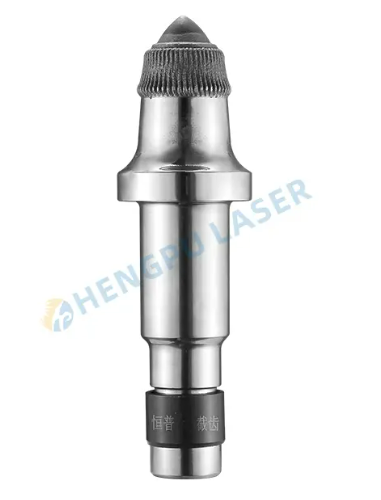
Hengpu Laser supplies Coal Mining Picks for underground mining machinery and develops them as part of its broader wear-resistant cutting-tool system. The company combines carbide cutting elements, engineered steel bodies, and reinforced wear areas to address demanding mining conditions.
As underground mining becomes more mechanized, cutting tools must support machines operating at higher production rates and under longer working cycles.
A single weak pick can affect surrounding tools. When one pick breaks or wears excessively, nearby picks receive additional load. This may increase vibration, reduce cutting efficiency, and accelerate damage across the cutting head.
Mine operators are therefore paying closer attention to:
Carbide fracture resistance
Steel-body wear
Brazing and connection strength
Pick rotation
Dimensional consistency
Holder compatibility
Batch-to-batch quality
Total tool consumption
This creates opportunities for higher-performance Coal Mining Picks. However, performance cannot be determined by carbide hardness alone.
Hard carbide can resist abrasion but may be vulnerable to impact. Tougher carbide may resist fracture but wear more rapidly in abrasive seams. The tool body must also support the carbide as surrounding steel is exposed to coal, rock particles, and continuous friction.
Hengpu Laser approaches pick design as a complete system. Material selection, carbide geometry, body structure, wear-resistant reinforcement, and manufacturing quality are considered together according to the application.
Some of the strongest growth opportunities will occur in projects where conventional tools wear too quickly.
Coal seams may contain rock partings, pyrite, sandstone, or other hard inclusions. Foundation projects may pass through alternating layers of soil, gravel, and rock. Tunnel excavation may encounter fractured formations and sudden changes in compressive strength.
Under these conditions, common failure patterns include:
Carbide chipping
Complete tip fracture
Rapid steel-body washout
Uneven pick wear
Carbide separation
Shank deformation
Excessive heat
Short replacement intervals
Standard products may not solve every problem. Customers increasingly need suppliers to evaluate the machine, geology, cutting parameters, holder structure, and observed wear pattern before recommending a tool.
Hengpu Laser provides cutting picks for mining excavation, metro and tunnel construction, petroleum exploration, and road-and-bridge infrastructure. Its product development uses laser ceramic additive-manufacturing expertise and metal-ceramic wear-resistant structures to reinforce critical tool areas.
This technical capability allows the company to support both standard tool selection and customized wear-resistant solutions.
Demand will not be limited to rapidly developing regions.
Established markets must also repair aging roads, bridges, tunnels, railway systems, industrial facilities, and urban utilities. Infrastructure renewal requires pavement removal, foundation reinforcement, underground excavation, and reconstruction in locations where access may be restricted.
These projects often place a premium on predictable performance. Contractors working in urban areas may have limited operating windows and strict requirements for noise, vibration, safety, and project completion.
Reliable cutting and drilling tools help reduce unexpected shutdowns and make replacement planning more predictable. This supports demand for durable tools even when the total volume of new construction is moderate.
The next growth stage will favor manufacturers that provide more than basic replacement parts.
Mining and foundation contractors will increasingly expect:
Application-specific product recommendations
Consistent manufacturing quality
Strong wear and impact resistance
Technical analysis of failed tools
Compatibility with existing machines
Customized carbide and body designs
Reliable supply for long-term projects
Hengpu Laser positions itself as a wear-resistance solution provider rather than only a pick manufacturer. Under the Hengpu Picks product system, the company offers tools for coal mining, road milling, tunneling, rotary excavation, and related engineering operations.
For coal mines experiencing rapid pick consumption, Hengpu Laser can evaluate the seam conditions, machine type, common wear patterns, and operational requirements to recommend suitable Coal Mining Picks.
Future demand for mining and foundation drilling tools will grow around expanding cities, transport corridors, mineral development, mine modernization, underground construction, and infrastructure renewal.
For Coal Mining Picks, demand will be concentrated in regions where underground production remains important and mine operators are investing in mechanization and operational efficiency.
The market will also place greater value on service life, product consistency, carbide support, impact resistance, and customized design. Customers will increasingly judge tools according to total operating performance rather than initial purchase cost alone.
Hengpu Laser combines carbide-tool manufacturing, laser ceramic technology, metal-ceramic wear protection, and application-specific product development. Its Coal Mining Picks are designed to help mining customers reduce premature wear, control replacement frequency, and maintain more stable cutting performance in demanding underground conditions.
Contact us today to receive professional product recommendations and customized wear-resistant solutions for your application.


