


Views: 0 Author: Site Editor Publish Time: 2026-08-05 Origin: Site


Mining equipment operates in a continuous cycle of loading, crushing, conveying, discharging, and repositioning. During each cycle, surfaces come into contact with ore, waste rock, sand, fines, and oversized fragments. The resulting wear is rarely caused by one mechanism alone. Sliding abrasion removes material gradually, direct impact deforms or cracks exposed areas, and trapped particles can cut grooves into chutes, buckets, liners, and transfer points.
As mines pursue higher throughput and longer operating hours, small losses of material from these surfaces accumulate more quickly. A worn chute can change material flow, a thin bucket floor can require unscheduled repair, and a damaged liner can expose an expensive structural component. Tungsten carbide wear plates are gaining attention because they place very hard wear-resistant material in the zones where conventional steel loses thickness fastest.
Wear is often first noticed as a reduction in plate thickness, but geometry matters just as much. Grooves and depressions can disturb the flow of ore, create hang-up points, or direct material toward areas that were not designed to receive concentrated impact. Once the original profile changes, wear may accelerate because the load is no longer distributed evenly.
A mine that handles more tonnes per hour also moves more abrasive particles across the same contact zones. Even if the ore characteristics do not change, longer shifts and increased utilization reduce the calendar time available between repairs. Maintenance teams may have fewer opportunities to remove equipment from service, while production planners expect more predictable availability.
This operating environment favors wear solutions that extend inspection intervals and allow repair work to be planned. The objective is not to eliminate wear completely, which is unrealistic, but to control where it occurs and slow it enough that maintenance can be synchronized with scheduled shutdowns.
Tungsten carbide is substantially harder than ordinary construction steel. When hard mineral particles slide across a protected surface, carbide resists penetration and micro-cutting. This makes it useful in areas exposed to silica-rich rock, sharp ore fragments, and repetitive sliding abrasion. The material is also suitable for localized wear zones where a small protected area can prevent rapid loss of a much larger component.
However, hardness alone is not enough. Mining equipment also experiences shock, bending, vibration, and thermal stress from welding or operation. A fully rigid and brittle plate can crack if it is used in an impact-dominated location without adequate support. Successful wear systems combine a hard phase with a tougher substrate or matrix that carries structural loads.
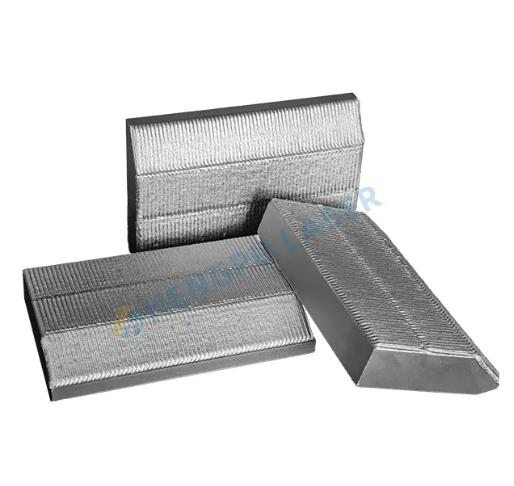
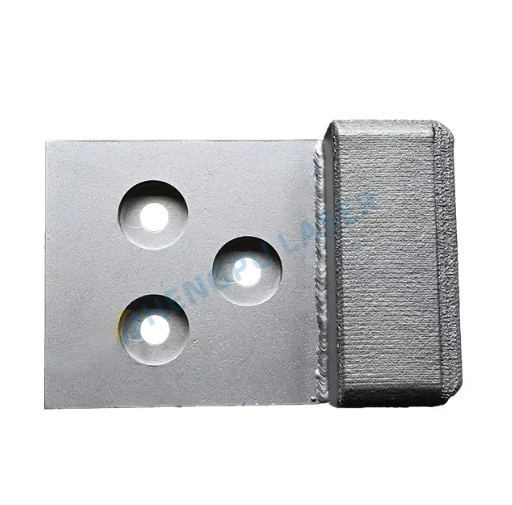
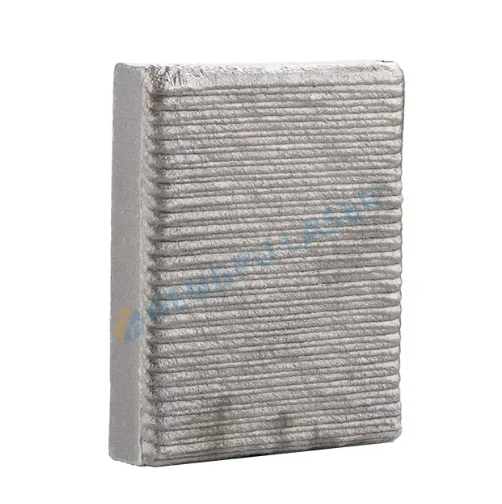
Many mining wear plates are not solid tungsten carbide. They use a steel base with carbide particles, carbide inserts, hardfacing, or a metal-ceramic layer applied to the working surface. This structure allows the plate to be welded or mounted to equipment while concentrating premium wear material where contact occurs.
The design of the composite determines performance. Particle distribution, bonding quality, layer thickness, steel grade, and the transition between hard and tough regions all influence whether the plate wears uniformly or develops cracks and spalling. A well-engineered composite protects the surface while retaining enough toughness to absorb normal equipment loads.
Tungsten is a valuable and supply-sensitive material, so applying it only where wear is severe can be more practical than manufacturing an entire component from a high-cost alloy. Wear maps, maintenance records, and inspection photos help identify the zones that lose thickness first. Plates, strips, blocks, or patterned deposits can then be positioned around discharge lips, impact zones, corners, and high-velocity flow paths.
 |  |  |
Material transfer systems experience both sliding abrasion and impact. Ore falls from one conveyor to another, changes direction, and accelerates along chute surfaces. The first impact zone may need a tougher design, while the downstream sliding zone may benefit from higher hardness. Using the same plate throughout can lead to uneven performance.
Engineered Wear Parts can be arranged by zone, with thicker or more impact-tolerant protection at the loading point and highly abrasion-resistant protection along the flow path. Correct placement reduces the risk that material bypasses the liner and attacks the supporting structure.
Bucket floors, sidewalls, heel areas, and cutting-edge supports are exposed to repeated scraping and impact. Wear plates can protect these surfaces without requiring the entire bucket to be manufactured from very hard steel. Replaceable strips and blocks are particularly useful in predictable high-wear areas.
Processing equipment contains many surfaces that guide, meter, or contain abrasive material. Feed chutes, crusher inlet areas, screens, deflectors, and discharge sections may all require localized protection. In these applications, dimensional stability can be as important as remaining thickness because changing clearances may affect equipment efficiency.
Two pieces of mining equipment may handle the same ore but experience different wear. A horizontal surface may be exposed mainly to sliding abrasion, while a vertical wall at a transfer point receives direct impact. A plate optimized for hardness may perform well in the first location but crack in the second.
Selection should consider particle size, drop height, material velocity, moisture, temperature, angle of contact, and whether large fragments can strike the surface. Fines can create intense three-body abrasion when trapped between moving parts, while oversized rocks create concentrated impact. Understanding the dominant mechanism prevents overreliance on a single hardness value.
More thickness does not always produce a proportional increase in life. A thick brittle layer may crack, while an oversized plate can be difficult to form or install. The protective layer should be matched to the expected wear depth, inspection interval, and support provided by the base structure.
Maintenance records are especially useful. If one corner repeatedly wears through first, adding uniform thickness everywhere may waste material. A customized pattern, additional block, or revised flow design may provide better results. Digital models and field measurements can help position protection more accurately.
A wear plate can only perform if it remains attached. Poor fusion, inadequate weld preparation, incorrect preheating, or unsupported edges may cause lifting or cracking. The installation procedure should account for the base steel, hard layer, component temperature, weld sequence, and expected distortion.
The purchase price of a wear plate is only one part of the maintenance decision. Equipment isolation, cleaning, access preparation, removal, welding, inspection, and return to service all consume labor and production time. In remote mining operations, spare-part transport and specialized repair crews add further cost.
A longer-lasting plate creates value when it reduces the frequency of these interventions. The benefit is greatest on bottleneck equipment where one failure can slow an entire material-handling circuit. Planned replacement during a scheduled shutdown is generally more economical than emergency repair during production.
Standard plates are useful for common flat areas, but mining equipment often contains curves, transitions, narrow channels, and complex impact zones. Custom profiles, bevels, groove patterns, and segmented layouts can improve coverage and simplify installation. They also allow wear material to be concentrated around weld seams, corners, and other vulnerable features.
Mining companies increasingly treat wear as a measurable operating variable. Thickness monitoring, planned liner changes, wear mapping, and component history make it possible to predict maintenance more accurately. Tungsten carbide wear plates fit this approach because they can be engineered for specific zones, replaced as sacrificial elements, and evaluated by cost per operating hour or tonne handled.
Hengpu Laser develops customized wear plates, strips, blocks, and carbide-tipped engineering components for mining and other severe-wear industries. Using metal-ceramic composite design and ceramic 3D-printing technology, the company can tailor profiles, layer thickness, and installation features to help customers protect critical equipment, extend maintenance intervals, and reduce unplanned downtime.
For mining operators facing continuous abrasion, impact, and material flow, the correct wear protection solution can significantly reduce maintenance frequency and extend the service life of critical equipment components. Hengpu Laser provides tungsten carbide wear plates and customized wear-resistant components for demanding mining environments. Contact us today to share your equipment type, wear location, and operating conditions, and receive a tailored wear protection recommendation for your application.


