

Views: 0 Author: Site Editor Publish Time: 2026-09-20 Origin: Site


Premature tool failure does not just cost the replacement price of a single part. It halts the entire milling crew, wastes diesel fuel, and risks severely damaging the tool holder and drum. Choosing the wrong cutter creates massive operational friction for contractors facing aggressive schedules. You end up replacing bits constantly, burning through project margins on downtime and unexpected equipment repairs.
We designed this guide to provide a robust technical framework for evaluating and shortlisting options. You will learn how to select tools based on substrate hardness, machine compatibility, and metallurgical quality to minimize your actual cost-per-milled-ton. Remember, no single tool design works for every project.
Selection requires carefully balancing impact resistance against wear resistance before the grinder ever touches the ground. Evaluating these parameters carefully ensures your machine operates at peak efficiency.
Substrate dictates the carbide profile: sharp, penetrating tips are required for standard asphalt, while blunt, heavy-duty profiles are necessary for high-impact concrete.
Verifiable carbide quality and braze joint integrity are more reliable indicators of pick lifespan than generalized marketing claims.
Selecting high-quality Wirtgen-compatible milling picks can optimize replacement costs without sacrificing drum performance, provided dimensional tolerances are strictly matched.
Daily wear-pattern inspections and proper retention-system seating are critical to preventing catastrophic holder damage.
Tooling choices directly influence project profitability. Viewing consumable parts solely through the lens of initial purchase price often creates hidden financial leaks. Instead, contractors must define "cost per milled ton" as the ultimate metric for operational success.
When you focus on the cost per milled ton, you evaluate the tool's true value. High-quality Milling Picks might cost slightly more upfront. However, they process significantly more material before requiring replacement, driving down the overall expense rate.
Using the wrong pick profile triggers a chain reaction of inefficiencies. An incorrect or dull tip drastically increases cutting resistance. This resistance translates into severe machine vibration. Vibration forces the engine to work harder, which sharply reduces fuel efficiency.
Furthermore, excessive vibration sends shockwaves through the machine chassis. Over time, these vibrations lead to unscheduled drum maintenance, sensor failures, and operator fatigue. The time spent idling while a crew manually changes broken bits often costs more in lost productivity than the parts themselves.
A poorly selected tool frequently fails to rotate. When a bit seizes in the holder, it wears down unevenly. This creates a flat spot, commonly known as pencil-pointing. Once the steel body of the bit wears away completely, the abrasive road material begins grinding directly against the tool holder, or base block.
A worn tool holder escalates a minor consumable cost into a major mechanical repair. Replacing a base block requires skilled welding, specialized alignment tools, and hours of machine downtime. Preventing holder damage starts with selecting bits that fit correctly and rotate freely.
Cost Category | Standard Metric | Impact of Poor Tool Selection |
|---|---|---|
Direct Material | Price per bit | Frequent bulk reordering due to premature tip fracturing. |
Labor & Time | Hourly crew rate | Extended idle times during mid-shift tooth replacement. |
Equipment Wear | Maintenance budget | Rapid degradation of base blocks and drum housing. |
Fuel Consumption | Gallons per hour | Higher engine load required to push blunt tips through substrate. |
Matching the tool to the material is the cornerstone of efficient milling. Substrates vary wildly in hardness, abrasiveness, and structural integrity. You must adapt your tooling strategy to match the road conditions accurately.
Standard asphalt layers present soft to medium hardness, though aggregate abrasiveness can vary heavily based on regional geology. In these conditions, contractors need tools designed for clean, rapid penetration.
Your primary selection criteria should focus on slimmer, penetrating carbide tips. These designs ensure clean cuts and lower cutting resistance. When you use properly profiled Asphalt Milling Picks, you achieve faster machine advance rates and a smoother milled surface.
However, nuance is required when transitioning to highly abrasive asphalt. Mixes containing high quartz or granite content wear down steel bodies quickly. In these abrasive environments, you need bits featuring enlarged carbide caps or specialized hardfacing on the steel head to prevent premature body wash.
Concrete surfaces present entirely different challenges. These substrates feature high compressive strength, rigid structures, and the frequent presence of embedded steel rebar. Using a sharp, thin tip here will result in immediate catastrophic failure.
For high-impact applications, contractors must select cap-shaped, blunt carbide profiles. These sturdy Concrete Milling Picks are specifically engineered to withstand severe impact shock without fracturing. They rely on heavy-duty steel bodies to absorb the massive kinetic energy generated when the drum strikes rigid concrete or steel reinforcement.
Deep base reclamation involves mixing existing asphalt, base layers, and soil into a unified matrix. This process encounters mixed materials, unpredictable debris, and requires deep ground penetration.
Selection criteria for these brutal conditions include large shank diameters, typically 22mm or 25mm. The tools demand extreme wear protection, such as heavy hardfacing grooves, to survive the abrasive soil mixture. Robust braze joints are mandatory to keep the carbide tip attached despite constant, multi-directional impacts.
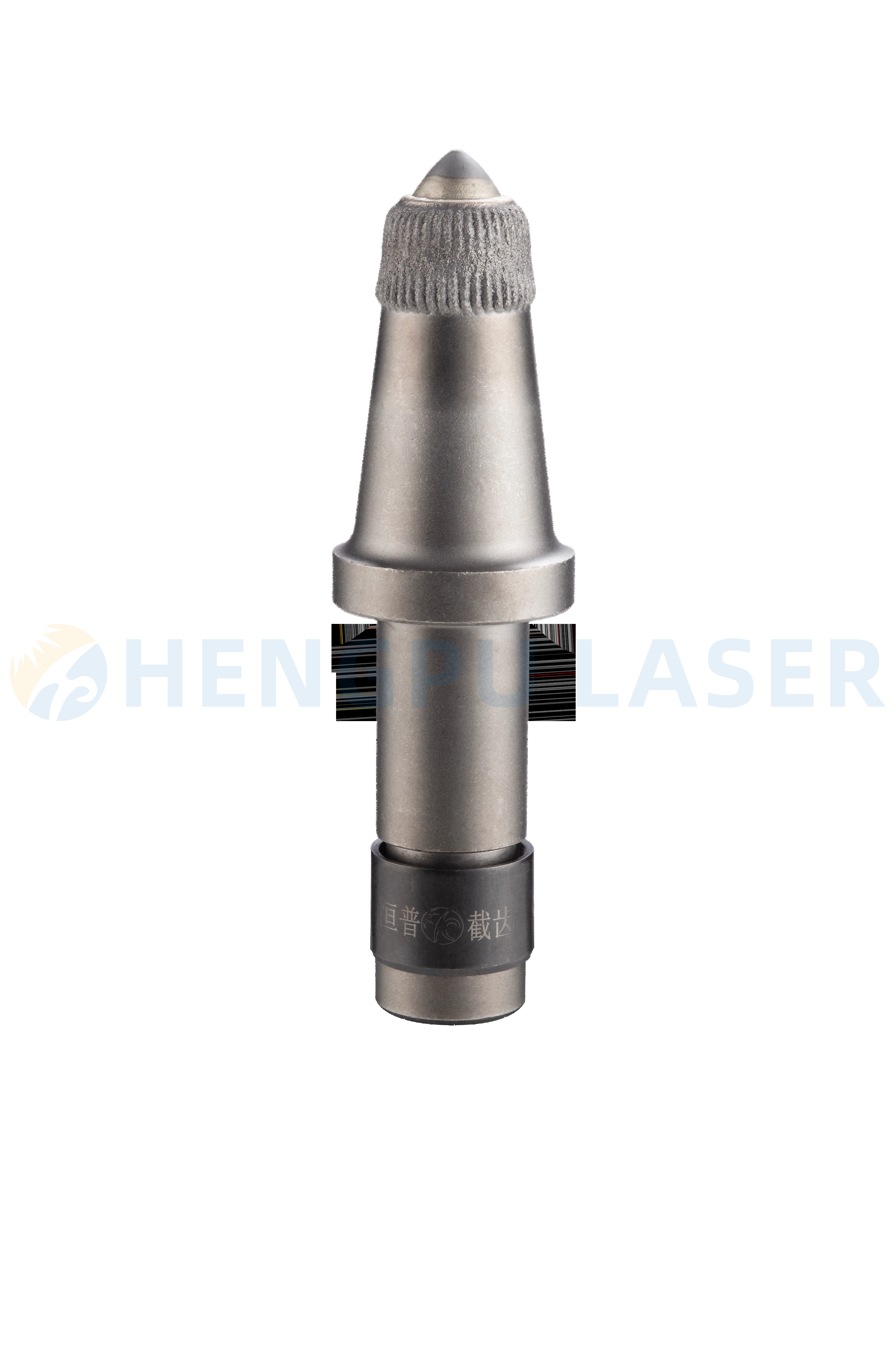
You cannot judge a cutting tool by looking at it in a catalog. Evaluating suppliers requires digging into the metallurgical science and manufacturing protocols behind the product. Use these technical dimensions to separate premium tools from subpar imitations.
The tungsten carbide tip does the actual cutting. Evaluating its quality requires understanding the tungsten carbide-to-cobalt ratio. Cobalt acts as the binder that holds the hard tungsten grains together.
Higher cobalt content increases the metal's toughness, providing better impact resistance for striking concrete. Conversely, lower cobalt content increases the overall hardness, offering superior wear resistance against abrasive asphalt. You must ask suppliers for the specific cobalt percentage to ensure the grade matches your primary application.
The brazing process binds the carbide tip to the steel body. It plays a critical role in preventing tip loss during operation. If a bit loses its carbide tip, the steel body will grind away in minutes.
Demand suppliers with documented shear-strength testing protocols. Quality manufacturers use specialized copper or silver braze alloys and computer-controlled induction heating to ensure a void-free bond. Ask for their quality control data before placing a bulk order.
The steel body supports the carbide and absorbs operational shock. Assess the supplier's steel alloy hardening process. Look for forged steel that has undergone precise heat treatment to achieve optimal structural integrity.
Additionally, examine the presence of wear plates, extractor grooves, or hardfacing on the tool head. These protective features defend the tool holder from abrasive wash. A well-designed body sacrifices itself slowly to keep the base block safe.
Evaluate the clamping sleeve, often called the tension bush. The retention system serves two critical, opposing functions. It must hold the pick securely inside the bore to prevent it from falling out, while simultaneously allowing it to rotate freely.
Free rotation ensures symmetrical wear around the carbide tip and steel body. If the tension sleeve is too rigid, the bit seizes. If it is too loose, the bit wobbles and destroys the internal bore of the holder.
Request the cobalt binder percentage for the specific carbide grade.
Review laboratory shear-strength reports for the braze joint.
Verify the steel heat-treatment specifications and hardness rating.
Test the compression tension of the retention sleeve in a standard block.
Contractors often debate the merits of Original Equipment Manufacturer (OEM) parts versus aftermarket alternatives. While OEMs offer guaranteed compatibility, premium aftermarket brands provide competitive performance at better price points.
The primary concern regarding aftermarket parts is dimensional accuracy. Contractors worry that non-OEM parts will fit poorly in standard drums. An improperly sized shank can expand the bore of the tool holder, causing permanent mechanical damage to the drum itself.
However, top-tier aftermarket manufacturers utilize CNC machining to achieve exact dimensional parity with OEM tools. They reverse-engineer the specifications to ensure a flawless fit, eliminating the risk of holder damage when sourced from a reputable supplier.
How do you ensure a replacement part meets or exceeds OEM specifications? You must focus heavily on shank diameter tolerances and retention sleeve spring tension. Wirtgen-Compatible Milling Picks must slide into the holder with precise resistance.
Use a micrometer to measure the shank diameter of an aftermarket sample against an OEM standard. Squeeze the tension sleeve to compare the spring force. High-quality compatible parts will display identical, or sometimes superior, tension characteristics to keep the tool securely seated while promoting rotation.
Trust signals are vital when evaluating aftermarket vendors. Look for transparent manufacturing practices rather than bold marketing claims.
ISO Certifications: Ensure the facility operates under standardized quality management systems.
Testing Data: Request published carbide quality reports and braze strength analyses.
Warranty Terms: Look for clear, transparent warranty conditions that cover premature tip loss or shank breakage.
Switching tooling brands or profiles introduces operational variables. Mitigating these risks requires structured testing and rigorous field maintenance practices. Do not overhaul your entire fleet's tooling without proving the concept first.
We recommend running a structured side-by-side test to establish a baseline of wear rates under identical conditions. Split the milling drum in half. Install your current tools on the left side and the new variants on the right side.
Run the machine through a standard shift. At the end of the day, count the number of broken tips, measure the body wear, and check for seized tools on both sides. This split-drum method eliminates variables like machine speed or substrate changes, providing hard data on which tool performs better.
Proper installation dictates tool longevity. Highlight the absolute necessity of cleaning the holder bore before inserting a new bit. Debris trapped inside the block prevents the tool from seating fully and restricts its ability to spin.
Always use the proper extraction and insertion tools. Beating a tool into place with a standard sledgehammer can micro-fracture the carbide tip before it even touches the asphalt. Using a soft-faced mallet or pneumatic insertion tool ensures the retention sleeve seats correctly.
Train your ground crews to spot abnormal wear patterns early. Recognizing issues mid-shift prevents catastrophic drum damage.
Teach them to identify "pencil-pointing." This occurs when a bit stops rotating and wears down on one side, resembling the tip of a sharpened pencil. Crews should also look for carbide micro-fracturing. If tips are chipping rapidly, it usually indicates the machine advance speed is too high, creating thermal shock, or the water spray system is failing to cool the drum adequately. Adjust machine parameters immediately upon spotting these signs.
Standardizing on a single pick type for all your jobs inevitably leads to hidden operational inefficiencies. A sharp asphalt tool will shatter on concrete, while a blunt concrete tool will waste fuel and slow down production on soft asphalt. Tailoring your approach is critical.
We recommend establishing a defined matrix of two to three variant profiles based on your typical project mix. For example, if your workload is 80% asphalt and 20% concrete, keep high-penetration tips in bulk and a specialized reserve of heavy-duty impact bits for intersection work or rigid base layers.
Do not leave your operational efficiency to guesswork. Contact a tooling specialist today to analyze your recent worn picks, identify your primary wear modes, and request a trial set for your next challenging milling project.
A: You should inspect the drum during every scheduled pause, such as water truck refills or fuel stops. Frequent interval checks allow crews to spot uneven wear, pencil-pointing, or seized parts before they damage the expensive base blocks.
A: Fracturing usually occurs from a mismatch between the tool profile and the substrate, such as using a sharp asphalt tip on rigid concrete. Excessive machine advance speed can also cause failure by inducing severe thermal shock and sudden impact overload.
A: No. Standard asphalt profiles feature slim, penetrating tips. When these strike high-compressive-strength concrete or rebar, there is a very high probability of immediate tip shattering. Concrete demands blunt, heavy-duty, impact-resistant profiles.
A: Verify quality by checking the shank dimensional tolerances with a micrometer to ensure a secure fit. Additionally, request braze joint shear test reports from the manufacturer and always conduct an initial small-batch field test on a split drum before a full rollout.


