


Views: 0 Author: Site Editor Publish Time: 2026-07-24 Origin: Site


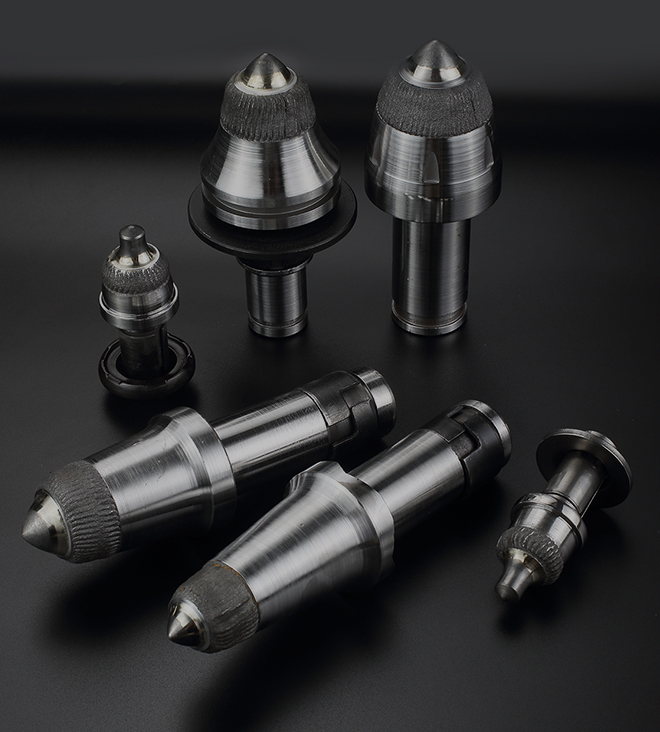
In foundation drilling, Rotary Cutting Picks are continuously exposed to soil, gravel, sandstone, weathered rock, and hard mineral inclusions. Their condition directly affects penetration efficiency, drilling stability, fuel consumption, and the frequency of equipment shutdowns.
However, worn picks should not simply be removed and discarded. Their wear patterns contain useful information about geology, drilling parameters, toolholder condition, carbide selection, and operating practices.
By examining where and how a pick wears, contractors can identify the probable cause of premature failure and make targeted adjustments. Research into conical cutting tools has identified abrasion, fracture, body thinning, tip separation, and structural damage as common wear or failure modes. Tool rotation, material selection, rock properties, and cutting loads all influence how these patterns develop.
A rotary drilling rig may continue working even when several picks have become dull or damaged. However, the machine must apply more torque and crowd force to maintain penetration.
This can result in:
Slower drilling progress
Higher fuel consumption
Increased vibration
Greater stress on the drilling bucket
Accelerated holder wear
Poor hole-wall quality
More frequent pick replacement
Unexpected downtime
Wear analysis helps distinguish normal consumption from abnormal failure. Uniform wear usually indicates that the pick, holder, operating parameters, and geological conditions are reasonably matched. Severe one-sided wear, carbide breakage, or rapid body erosion often signals a problem that should be corrected.
Hengpu Laser supplies Rotary Cutting Picks for foundation drilling and rotary excavation applications. Its product system combines tungsten carbide tips, engineered steel bodies, and metal-ceramic wear protection to address both abrasive wear and impact loading in demanding formations.
Normal wear develops gradually around the carbide tip and pick body. The tip becomes shorter and slightly rounded, but its general shape remains symmetrical.
This pattern usually indicates:
The pick is rotating correctly
The holder is in acceptable condition
Cutting forces are relatively balanced
The carbide grade matches the formation
Drilling parameters are not excessively aggressive
Uniform wear does not mean the tool should remain in service indefinitely. Once the tip becomes too blunt, penetration resistance rises and the machine consumes more energy.
Operators should establish a replacement limit based on carbide loss, body condition, drilling speed, and machine load rather than waiting for complete tool failure.
One-sided wear is one of the most recognizable abnormal patterns. One side of the carbide and steel body becomes flat, while the opposite side remains relatively unworn.
The most common cause is restricted pick rotation. Round-shank Rotary Cutting Picks are generally expected to rotate gradually inside the holder, helping distribute wear around the tool. When dirt, corrosion, deformation, or incorrect clearance prevents rotation, the same surface repeatedly contacts the rock. Experimental research on conical picks supports the role of rotation in maintaining more uniform tip and body wear.
Other possible causes include:
A damaged or distorted holder
Incorrect pick installation
Misalignment of the holder
Uneven cutting loads
Excessive lateral force
Incompatible shank and holder dimensions
Remove compacted material from the holder bore and check whether the pick rotates freely. Inspect the retaining ring, shank, and holder for deformation or uneven clearance.
If new picks repeatedly develop the same flat wear pattern in one position, the holder should be repaired or replaced.
A rounded carbide tip usually results from continuous abrasive wear. It is especially common in formations containing quartz, sand, or other abrasive minerals.
As the tip becomes blunt, the contact area between the tool and rock increases. The pick changes from penetrating and fracturing the formation to pressing and grinding against it.
Operators may notice:
Reduced drilling speed
Higher torque
More vibration
Increased fuel consumption
Greater heat generation
Finer or irregular spoil
A blunt tip may indicate normal end-of-life wear, but unusually rapid rounding can suggest that the carbide is too soft for the formation.
Hengpu Laser evaluates working conditions when recommending Rotary Cutting Picks, allowing carbide properties, tip geometry, and wear-resistant structures to be matched more closely to the abrasiveness and impact intensity of the project.
Chipping appears as small pieces missing from the carbide edge. More severe damage may involve large cracks or complete tip fracture.
Common causes include:
Sudden contact with hard boulders or mineral inclusions
Excessive impact loading
High machine vibration
An unsuitable carbide grade
Insufficient steel support around the tip
Aggressive crowd pressure
Incorrect cutting angle
Internal carbide defects
Carbide must balance hardness and toughness. A hard grade may resist abrasion but can become vulnerable to impact fracture. A tougher grade may withstand shock more effectively but wear faster in abrasive formations.
If fracture occurs across many positions, review the geology, drilling pressure, rotational speed, and carbide specification. If it occurs repeatedly in one position, inspect the corresponding holder and tool arrangement.
Hengpu Laser develops cutting tools using advanced material selection and ceramic 3D-printing technology. The company’s metal-ceramic composite wear layer is designed to protect critical areas of the pick while maintaining the structural support required for impact-intensive work.
Sometimes the carbide disappears from the pick body without showing the typical appearance of gradual wear. This may indicate failure at the connection between the carbide and steel.
Possible causes include:
Incomplete brazing
Voids inside the brazed joint
Contaminated bonding surfaces
Incorrect heating or cooling
Excessive residual stress
Poor carbide positioning
Strong impact against hard rock
Operators should distinguish between a carbide tip that has worn away and one that has separated. A separated tip often leaves a visible cavity or relatively clean connection surface.
Repeated tip loss across a batch may indicate a manufacturing problem. Isolated loss may result from unusual impact or a damaged holder.
Reliable production control is therefore essential. Accurate positioning, consistent bonding, dimensional inspection, and material testing help prevent premature separation.
In some cases, the carbide remains usable while the surrounding steel body wears away rapidly. This is sometimes called body washout.
Once too much steel is lost, the carbide no longer receives adequate support. The exposed tip is more likely to bend, loosen, chip, or fracture.
Body washout may be caused by:
Highly abrasive soil or rock
Fast circulation of spoil around the pick
Insufficient body hardness
Poor wear protection
Incorrect pick position
Excessive tool exposure
An unsuitable body design
Hengpu Laser applies laser implantation to create integrated metal-ceramic wear-resistant layers on engineering cutting tools. This technology is intended to slow wear in critical body areas, preserve carbide support, and extend the usable life of the complete pick rather than protecting only the cutting tip.
Wear marks around the shank can reveal movement, looseness, or alignment problems inside the holder.
A polished or unevenly worn shank may indicate:
Excessive holder clearance
An enlarged holder bore
Damaged retaining components
Strong lateral loading
Incorrect shank dimensions
Prolonged operation with a loose pick
A loose pick can damage both the tool and holder. Replacing only the pick may provide a temporary solution, but the abnormal wear will return if the holder remains damaged.
Operators should inspect the holder whenever a pick shows unusual shank wear, repeated breakage, or excessive movement.
Blue, brown, or dark discoloration around the pick body may indicate excessive heat.
Heat can develop when a blunt or locked pick rubs against the formation instead of cutting efficiently. Poor spoil removal and excessive drilling pressure may also increase friction.
High temperatures can weaken the brazed joint, affect steel properties, and accelerate wear. Research on rock-cutting tools shows that abrasion, impact, and frictional heating can act together rather than as isolated mechanisms.
When thermal damage appears, check pick sharpness, rotation, drilling pressure, rotational speed, and spoil evacuation.
A structured inspection process produces better results than examining individual failed picks separately.
Remove soil and debris, then group the picks according to their position on the drilling bucket or auger.
Check changes in tip length, symmetry, body diameter, shank condition, and carbide exposure.
Determine whether damage is concentrated on the outer cutting positions, center positions, or one specific holder.
Look for cracks, enlarged bores, misalignment, compacted debris, and retaining-system damage.
Compare the wear pattern with geology, rotational speed, crowd pressure, torque, penetration rate, and vibration.
The solution may involve changing operating parameters, replacing holders, improving cleaning, adjusting the pick arrangement, or selecting a different carbide grade and body design.
Rotary drilling pick wear should be treated as diagnostic evidence rather than simple tool consumption. Uniform wear generally reflects balanced operation, while flat wear, chipping, tip loss, body washout, and shank damage indicate specific mechanical, geological, or product-related problems.
Hengpu Laser develops Rotary Cutting Picks for mining excavation, foundation drilling, tunneling, and infrastructure applications. Through carbide selection, steel-body engineering, laser-implanted metal-ceramic wear protection, and application-specific customization, the company helps customers address premature wear and improve drilling efficiency. Its service system also includes working-condition analysis and tailored wear-resistant solutions.
By regularly inspecting used picks and connecting each wear pattern to its probable cause, drilling contractors can reduce unnecessary replacements, protect the drilling system, and achieve more stable performance in changing formations.
Contact us today to receive professional product recommendations and customized wear-resistant solutions for your application.


