

Views: 0 Author: Site Editor Publish Time: 2026-11-02 Origin: Site


Continuous extraction machinery relies entirely on the integrity of its consumable tooling. When you push a 100-ton continuous miner into a solid rock face, the only things actually breaking the geology are the Cutting Picks laced across the drum. Tool failure drives unplanned operational downtime. It directly reduces daily extraction rates and disrupts production schedules. High-impact, highly abrasive geological environments rapidly degrade standard tooling. Suboptimal pick selection leads to catastrophic carbide failure, accelerated replacement cycles, and increased machine energy consumption. Worn tools force equipment to work harder, lowering overall daily yield and stressing hydraulic systems. Solving this requires a systematic approach to evaluating and specifying tools. You must analyze geological strata hardness, machine kinematics, and specific wear mechanisms to optimize extraction efficiency. This guide details how to match tool geometry and metallurgy to specific mining applications, evaluate tip specifications, and mitigate common failure modes. The reality on the face is unforgiving. Getting this specification right is the difference between a productive shift and a maintenance nightmare.
Geological Matching is Paramount: Selecting the correct cemented tungsten carbide grade and tip geometry must be directly correlated with the Unconfined Compressive Strength (UCS) and abrasiveness of the target rock or coal seam.
Design Dictates Lifespan: Wear resistant round shank mining picks with advanced hardfacing significantly reduce "wash-out" and body wear, extending the functional life of the tool.
System-Wide Impact: Dull or improperly specified picks increase the energy draw on continuous miners and roadheaders, accelerating wear on the machine's drivetrain and cutting drums.
Rock and coal fragmentation relies on specific physics. Tools utilize point-attack or shear forces to induce tensile failure in geological formations. Compressive forces push the tool tip into the rock face. The rock resists until the pressure exceeds its tensile strength. The material then fractures and breaks away in chips or blocks. Efficient fragmentation minimizes dust generation and maximizes lump size. We see this constantly on the face. If the tool geometry is wrong, you get dust instead of usable coal.
The mechanics change depending on the target material. When cutting soft coal, the tool exploits natural cleats and fractures, wedging the material apart. When cutting hard rock, the tool must create a crushed zone directly beneath the carbide tip. This crushed zone transfers the compressive load outward, initiating tensile cracks that propagate to the free surface.
These tools act as the primary consumable interface on heavy equipment. Continuous miners rely on them to shear coal from the face. Longwall shearers use hundreds of these tools mounted on rotating drums. Specialized trenching equipment deploys them to cut through hard rock and permafrost. The entire extraction process hinges on the mechanical efficiency of this single point of contact. When a drum hits a hard sandstone intrusion, the picks take the entire shock load.
Underground environments present unique cutting objects. Coal seams and rock strata exhibit variable hardness and unpredictability. Operators frequently encounter sudden inclusions of hard rock within softer coal. This contrasts sharply with civil engineering applications. Asphalt, caliche, and concrete offer relatively uniform density and predictable resistance. Surface milling tools face consistent wear patterns.
Structural differences reflect these operational realities. Heavy-duty mining cutting picks require specialized shank designs to handle erratic loads. They utilize higher-impact cemented carbide grades to survive sudden shocks. The steel bodies are typically forged from high-strength alloys like 42CrMo, heat-treated to withstand massive bending moments.
Underground operations also demand specific spark-mitigation properties. Frictional ignition poses a severe risk in volatile coal seams. Standard road milling tools lack these specialized metallurgical and structural adaptations. You cannot simply swap a road milling tool into a continuous miner and expect it to survive a shift. The impact forces in underground extraction will snap a standard construction tool at the shank within minutes.
Conical picks feature a symmetrical, cone-shaped steel body topped with a carbide insert. Their geometry allows them to rotate freely within the tool holder during operation. This rotation ensures symmetrical wear across the carbide tip and steel body. Symmetrical wear maintains the point-attack profile longer. It prevents the tool from developing flat spots that increase friction and drag.
The angle of attack is a defining parameter. Engineers typically set these tools at a 45 to 55-degree angle relative to the cut. This provides the optimal clearance angle, preventing the steel body from dragging against the rock face. Dragging generates excessive heat and rapidly degrades the tool.
These tools excel in environments requiring continuous impact and penetration. Operators specify coal mining cutting picks for continuous miners and shearers. The point-attack mechanism effectively wedges into coal cleats and fractures the seam. They handle the heavy vibration and repetitive impact inherent in underground extraction. Proper rotation remains the defining factor for their functional success. If a conical pick jams in the block, it will burn up and fail within minutes.
Radial picks address applications requiring specific shear forces. They do not rely primarily on point-impact penetration. Instead, they slice or shear the material parallel to the cutting direction. Their fixed position in the tool holder prevents rotation. This makes them suitable for softer, more uniform materials where impact risks remain low.
You typically find radial designs on older shearer drums or specific continuous miner configurations designed for very soft coal. Because they do not rotate, the carbide insert must be massive to handle the unidirectional wear.
Recent innovative designs focus on extending service life. Engineers now incorporate reinforcing tips to handle higher loads. Split designs help prevent damage to long picks used in deep-cut coal extraction. These modifications aim to optimize the shearing action. Improved shearing reduces the yield of fines, minimizing hazardous dust generation at the face. We use these specific profiles when lump coal size is the primary production metric.
The round shank design offers superior engineering for heavy-duty applications. A cylindrical shank fits securely into a matching block. This geometry provides exceptional capacity to absorb multi-directional impact. As the cutting drum rotates, the tool encounters forces from various angles. The round shank distributes these stresses evenly, preventing localized fatigue.
Shank diameter directly correlates with impact resistance. We use specific diameters for specific machines. A 25mm shank might suffice for a light-duty trenching machine. However, heavy-duty continuous miners and roadheaders require 30mm, 35mm, or even 43mm shanks to handle the massive torque and thrust loads.
Retention systems play a major role in maintaining block compatibility. Circlips and heavy-duty retainer rings lock the shank in place. They prevent tool loss while still allowing necessary rotation. Modern mechanized extraction relies heavily on wear resistant round shank mining picks to maintain production targets. A lost tool not only stops cutting but also exposes the block to immediate destruction.
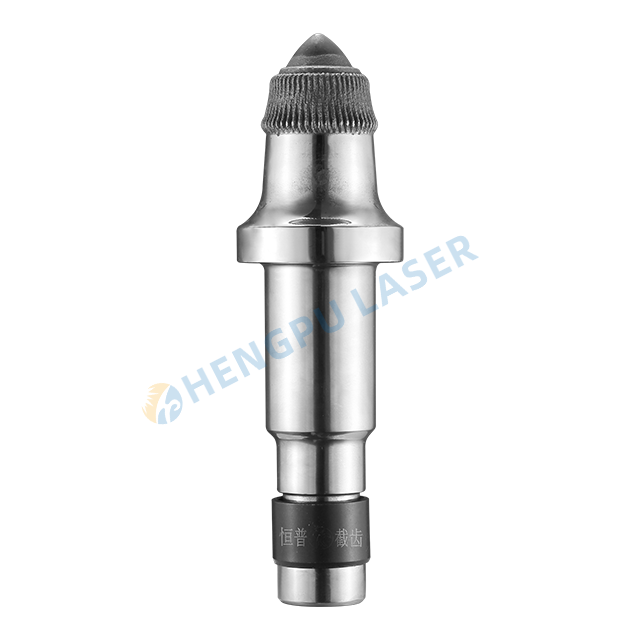
Success criteria for continuous miners involve maintaining high-frequency impact resilience. The tools strike the coal face hundreds of times per minute. Simultaneously, operators must manage frictional ignition risks. Striking hard rock inclusions can generate sparks. In volatile coal seams, this presents a severe explosion hazard. Metallurgical choices must balance hardness with spark mitigation.
Drum lacing strategies optimize the cutting sequence. Engineers arrange the tools in specific helical patterns across the drum. This lacing balances the load across the shearer. It prevents excessive vibration and ensures smooth operation.
We utilize single-tracking or multi-tracking lacing patterns depending on the geology. Single-tracking cuts larger lumps but induces more vibration. Multi-tracking smooths out the vibration but generates more fines. Proper specification of drum picks maximizes the advance rate while protecting the machine's structural integrity. A poorly laced drum will bounce off the face, destroying the gearboxes and fatiguing the boom arms.
Tunnel development presents distinct challenges. Operators navigate mixed-face conditions where geology changes rapidly. Highly abrasive rock rapidly degrades standard cutting tools. Roadheaders require specialized tooling to handle these extreme variations. The tools must survive sudden transitions from soft shale to hard sandstone without fracturing.
The type of cutting head dictates the tool specification. Axial cutting heads rotate parallel to the boom, milling the face. Transverse cutting heads rotate perpendicular to the boom, ripping the rock. Each requires a different approach to tool geometry and carbide selection.
Engineers must specify roadheader cutting picks for mining for dual forces. The machine first sumps into the rock face. This requires extreme compressive strength. The boom then shears across the face. This introduces heavy lateral loads. The tooling must withstand both sumping and shearing forces without bending or breaking.
Crossover applications demand heavy-duty mining-grade tools. Breaking caliche, hard rock trenching, and highwall mining require exceptional durability. Surface miners extract material in continuous layers. They encounter highly compacted, abrasive materials. Standard construction tools fail rapidly under these conditions. Mining-grade tools provide the necessary impact resistance.
Highwall mining presents a unique challenge. The machine operates remotely, plunging deep into the seam. You cannot easily pull the machine out to change tools. The tooling must survive the entire plunge. This requires the highest grade of carbide and the most robust hardfacing available.
These heavy-duty requirements contrast sharply with standard road milling. Road milling tools cut uniform asphalt. Mining tools face constant, severe impact from unpredictable rock. They need thicker carbide inserts and stronger steel bodies. Reliable cutting action under extreme stress dictates the success of surface extraction projects.
Evaluating metallurgical trade-offs is the first step in specification. Cemented tungsten carbide consists of carbide grains bonded by a cobalt matrix. The cobalt acts as a shock absorber. Increasing the cobalt binder percentage improves toughness and impact resistance. Decreasing cobalt and using finer carbide grains increases hardness and wear resistance. Engineers must balance these properties against the target geology.
If you run a hard, low-cobalt grade in blocky, high-impact rock, the tips will shatter. If you run a tough, high-cobalt grade in highly abrasive sandstone, the tips will wear flat in minutes. Matching tip profiles to fracture mechanics ensures efficient extraction. Different geologies require different penetration strategies. The profile dictates how the tool interacts with the rock.
Carbide Tip Profile | Primary Geological Application | Fracture Mechanics & Performance |
|---|---|---|
Ballistic | Soft to medium coal seams | High penetration, low impact resistance. Ideal for fast extraction. |
Parabolic | Medium to hard rock | Balanced penetration and impact absorption. Versatile performance. |
Cap-shaped | Highly abrasive, hard strata | Maximum impact resistance, lower penetration. Prevents catastrophic fracture. |
The steel body supports the carbide tip and absorbs shock. It requires precise heat treatment processes. Manufacturers temper the steel to achieve high yield strength. We typically look for a core hardness of 40 to 45 HRC. However, the steel must not become brittle. Brittle steel shatters under lateral loads. The heat treatment must create a tough core with a wear-resistant surface.
The head of the tool, directly supporting the carbide, requires even higher hardness, often exceeding 50 HRC. This gradient hardness is difficult to achieve but necessary for survival on the face.
Hardfacing overlays prevent premature failure. The steel immediately below the carbide insert faces severe abrasion. Plasma transferred arc (PTA) welding applies wear-resistant alloys to this critical area. This hardfacing prevents "wash-out" of the softer steel. Without hardfacing, the steel erodes, leaving the carbide tip unsupported until it falls out.
Preventing pick pull-out requires robust retention mechanisms. Sleeve systems use a compressible sleeve to hold the shank. Step-shanks utilize geometric interference. Heavy-duty retainers, like forged circlips, provide the most secure lock. The choice depends on the machine's vibration levels and the extraction environment.
A forged circlip expands inside the block, locking into a machined groove. This provides massive pull-out resistance while still allowing the tool to spin. Roll pins offer a cheaper alternative but often shear under heavy lateral loads.
Proper retention also protects the tool holder. The tool must rotate freely. If it jams, it grinds against the internal bore of the cutting block. This friction destroys the block. Replacing cutting blocks requires expensive, time-consuming drum rebuilds. Effective retention systems facilitate rotation while preventing vertical pull-out.
Understanding wear mechanisms prevents premature fleet failure. Abrasive wear involves the gradual loss of volume from the steel body and carbide tip. Highly abrasive rock acts like sandpaper, grinding the tool down. Thermal fatigue, or heat checking, causes micro-cracking. Rapid temperature fluctuations during cutting create these cracks. Catastrophic carbide fracture occurs when impact overloads the tip's structural limits.
You can read a failed tool to diagnose the problem. A smooth, flat break across the carbide indicates fatigue. A jagged, irregular break indicates impact overload. A blue discoloration on the steel body indicates severe overheating.
The "wash-out" effect remains a primary implementation risk. During operation, crushed rock flows past the tool. This abrasive flow erodes the softer steel body faster than the carbide tip. The steel recedes, exposing the base of the carbide insert. Once unsupported, normal cutting forces easily snap the carbide tip off. This renders the tool useless immediately.
Water spray systems provide critical thermal management. Cutting rock generates extreme heat. Water sprays cool the tools, preventing thermal fatigue and heat checking. They also suppress hazardous dust at the face. Maintaining proper water pressure and nozzle alignment is necessary for tool longevity. We require at least 100 PSI at the nozzle to effectively penetrate the dust cloud and reach the cutting interface.
Establishing baseline inspection intervals prevents catastrophic damage. Operators must not run dull tools. Dull tools fail to penetrate the rock. Instead, they crush and grind, generating excessive heat and vibration. This vibration destroys the tool holders and stresses the machine boom. Strict replacement protocols ensure tools are swapped before they damage the broader system. We track performance using metrics like picks consumed per thousand tons extracted.
Evaluating operational efficiency requires looking beyond the initial component acquisition. The true metric of success is the operational lifespan of the tool in the cut. Premium tools engineered with advanced hardfacing and optimized carbide grades run longer. They maintain their cutting profile through abrasive conditions. This extended lifespan directly reduces the frequency of maintenance interventions.
Every tool change halts production. Halting a continuous miner or roadheader stops the entire extraction sequence. The haulage system stops. The roof bolters wait. The entire section grinds to a halt.
Reducing maintenance downtime increases the total tonnage extracted per shift. Operations that prioritize extended component lifespans achieve higher daily yields. The focus must remain on keeping the machine engaged with the rock face for the maximum possible duration.
Tool degradation triggers cascading negative effects across the machinery. As tools wear down and lose their point-attack profile, they require higher thrust to penetrate the rock. The machine must push harder against the face. This requires significantly higher torque from the cutting drum motors. The immediate result is a measurable increase in electrical amp draw or fuel consumption.
We regularly see amp draws spike by 30% or more when running dull tools. This is wasted energy converted directly into heat and vibration.
This increased load accelerates wear on the machine's internal components. Gearboxes run hotter under the sustained strain. Hydraulic systems operate at higher pressures, degrading seals and hoses prematurely. Maintaining sharp, properly specified tools protects the machine's drivetrain. It ensures the equipment operates within its designed efficiency parameters, preventing catastrophic mechanical failures.
Cutting tools are highly engineered components, not simple commodities. Their metallurgical composition and structural geometry dictate the efficiency, safety, and output of the entire extraction process. Properly specified tools reduce energy consumption, protect heavy machinery from premature wear, and minimize hazardous dust generation. Ignoring geological realities during tool selection guarantees operational inefficiency and excessive maintenance downtime.
Procurement and engineering teams must prioritize hardfaced round shank designs for abrasive environments. Strictly matching cemented carbide grades to the geological Unconfined Compressive Strength (UCS) ensures the tools survive the required impact loads. Balancing cobalt content with carbide grain size remains the most important step in preventing catastrophic tip fracture.
Conduct a localized geological assessment to determine the exact UCS and abrasiveness of the target strata.
Request trial batches of tools with different carbide profiles to test specific drum lacing configurations.
Establish a strict wear-monitoring program to track tool degradation and optimize replacement intervals.
Verify the alignment and pressure of all water spray systems to ensure adequate thermal management.
A: A conical pick features a symmetrical, cone-shaped design that rotates in the block to ensure even wear and point-attack penetration. A radial pick has a fixed, blade-like geometry designed to shear material parallel to the cutting direction without rotating.
A: Lifespan varies entirely based on geological abrasiveness, machine thrust, and tool quality. In soft, clean coal, tools can last several shifts. In highly abrasive rock or mixed-face conditions, they may require replacement multiple times within a single shift.
A: Premature fracture usually results from impact overload when striking hard rock inclusions. It can also occur due to thermal fatigue from inadequate water cooling, or if the carbide grade is too hard and lacks sufficient cobalt binder for toughness.
A: Select tools with heavy-duty round shanks, high-impact cap-shaped carbide profiles, and substantial PTA hardfacing. The tools must withstand both the extreme compressive forces of sumping and the heavy lateral loads of shearing across the rock face.
A: Wash-out is the rapid erosion of the softer steel body immediately below the carbide tip due to abrasive rock flow. Hardfacing applies wear-resistant alloys to this area, preventing the steel from eroding and ensuring the carbide tip remains securely supported.
A: Free rotation ensures the tool wears symmetrically, maintaining a sharp point-attack profile. If rotation stops, the tool grinds flat on one side, destroying its cutting efficiency and transferring excessive friction and heat directly into the tool holder block.


