


Views: 0 Author: Site Editor Publish Time: 2026-07-24 Origin: Site


Cutting picks used in mining, road construction, tunneling, and foundation drilling must work under severe mechanical stress. During operation, the carbide tip may repeatedly strike hard rock, mineral inclusions, concrete, or uneven working surfaces. If the pick cannot absorb these sudden loads, chipping, cracking, carbide loss, or complete fracture may occur.
For equipment operators, impact fracture is more serious than normal abrasive wear because it can happen suddenly. A broken pick reduces cutting efficiency, increases machine vibration, transfers additional load to nearby tools, and may cause unplanned downtime.
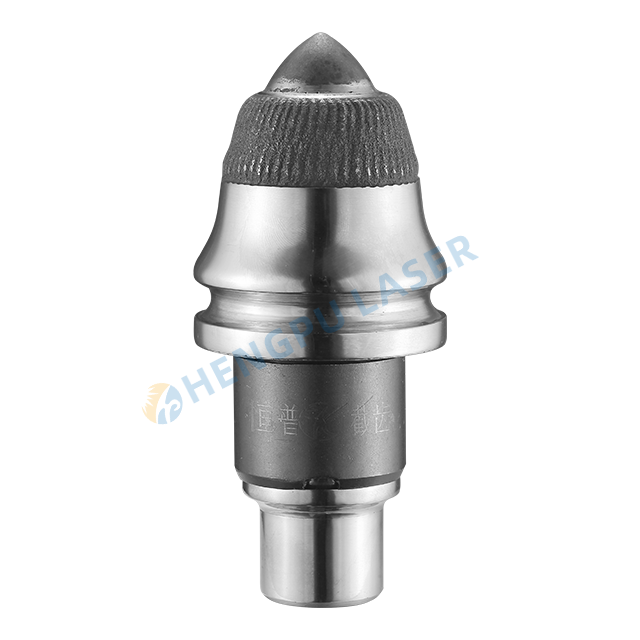
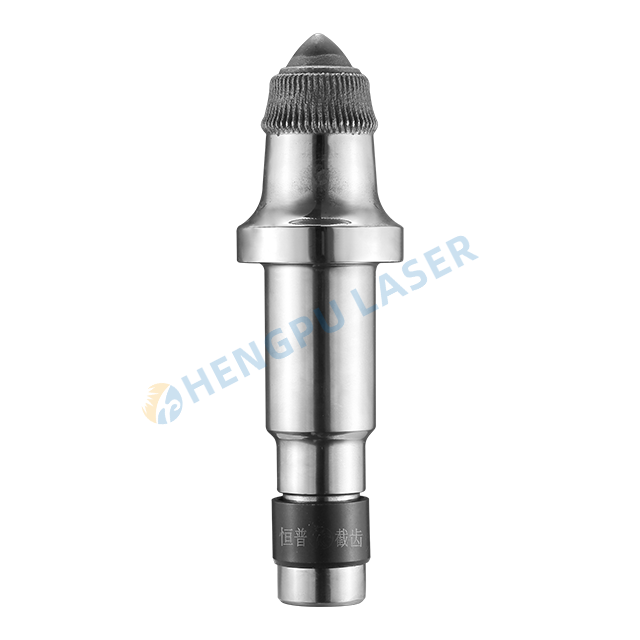
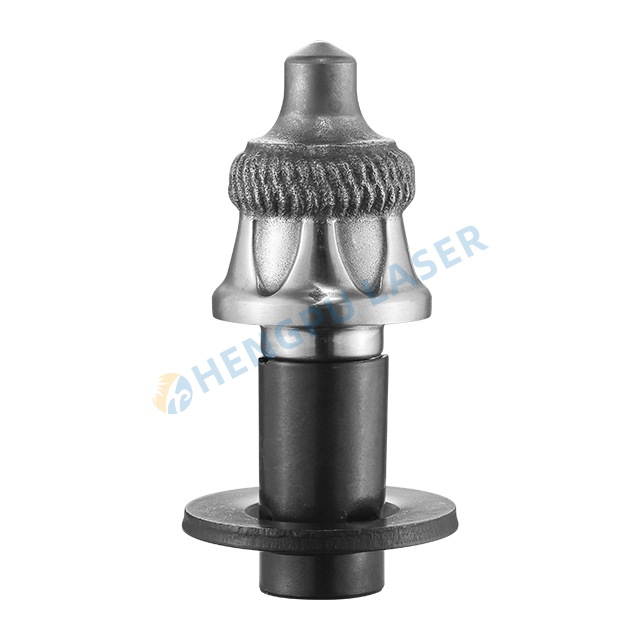
The impact resistance of Cutting Picks depends on several connected factors, including carbide toughness, steel-body strength, tip geometry, brazing quality, wear protection, manufacturing consistency, and correct product selection.
 |  |  |
Impact fracture occurs when the force applied to a cutting pick exceeds the strength of the carbide tip, steel body, or connection between them.
Common causes include:
Sudden contact with hard mineral inclusions
Excessive machine vibration
Uneven geological formations
Incorrect cutting angles
Worn or damaged toolholders
Poor pick rotation
Insufficient support around the carbide tip
Internal defects in the carbide or brazed joint
Impact damage does not always begin with a large visible crack. Small defects may develop gradually through repeated loading. Abrasive wear can also change the shape of the pick, expose more of the carbide tip, and increase stress around its base. Eventually, one strong impact may cause the weakened area to fracture.
For this reason, a reliable cutting pick must resist both progressive wear and sudden mechanical shock.
The carbide tip is one of the most important parts of a cutting pick. It must be hard enough to penetrate abrasive material while remaining tough enough to absorb impact energy.
A very hard carbide grade may provide excellent resistance to surface wear, but excessive hardness can also increase brittleness. In highly fractured rock or formations containing hard inclusions, a brittle carbide tip may chip before it reaches its expected service life.
A tougher carbide grade can better resist cracking, but it may wear faster in highly abrasive conditions. The correct material must therefore balance hardness and toughness according to the application.
Road milling, coal mining, tunneling, and rotary excavation do not create identical loading conditions. The carbide grade used for one application may not deliver the same performance in another.
Hengpu Laser selects carbide materials according to working conditions rather than relying on a single universal specification. By evaluating abrasiveness, impact intensity, machine power, and target material, the company can provide Cutting Picks better suited to specific operating environments.
Cemented carbide usually combines hard tungsten carbide particles with a metallic binder. The carbide phase provides wear resistance, while the binder helps the material absorb impact.
Grain size, binder distribution, density, and internal uniformity all influence fracture resistance. Porosity, contamination, or uneven microstructure can create weak points where cracks begin.
For demanding cutting applications, consistent material preparation and controlled manufacturing are essential. Hengpu Laser uses material testing and quality inspection to reduce performance variation between batches and improve tool reliability.
The shape of the carbide tip affects how cutting forces are distributed.
A narrow and sharp tip may enter material efficiently, but it can also concentrate stress in a small area. A larger or more rounded tip may distribute impact loads more effectively, although it may require greater cutting force.
Important design factors include:
Tip diameter
Cone angle
Tip length
Tip radius
Carbide insertion depth
Transition between carbide and steel
Alignment with the pick body
The carbide must also receive sufficient support from the surrounding steel. As the steel body wears away, more of the carbide becomes exposed. This increases bending stress and makes the tip more vulnerable to breakage.
Hengpu Laser designs its cutting tools to combine suitable carbide geometry with reinforced wear areas. The objective is not only to slow down material loss but also to preserve the structural support around the cutting tip.
Although the carbide performs the cutting action, the steel body carries and transfers the load to the toolholder.
The steel must be strong enough to support the carbide but tough enough to resist bending and fatigue. If the body is too soft, it may deform. If it is excessively hardened, it may become brittle and crack under repeated impact.
Controlled heat treatment is therefore critical. It helps create a steel body with the required hardness, toughness, and fatigue resistance.
Hengpu Laser uses high-strength alloy steel and controlled processing for its cutting-pick bodies. This allows the tool to absorb mechanical shock while maintaining dimensional stability during continuous operation.
The joint between the carbide tip and steel body is another common failure area.
Even a high-quality carbide tip may separate if the brazing process is inconsistent. Potential problems include:
Incomplete brazing coverage
Voids in the joint
Contaminated bonding surfaces
Uneven heating
Excessive residual stress
Incorrect carbide positioning
Insufficient bonding strength
During cutting, carbide and steel respond differently to heat and mechanical load. A reliable brazed joint must keep the carbide secure while accommodating these differences.
Hengpu Laser controls carbide positioning, brazing quality, and connection strength during production. Inspection of the tip-to-body connection helps reduce carbide loss and premature tool failure.
Wear resistance and impact resistance are closely related.
When the steel surrounding the tip wears too quickly, the carbide loses support. A heavily exposed carbide tip is more likely to chip or break when it strikes a hard object.
Hengpu Laser applies advanced laser and metal-ceramic composite technologies to reinforce critical wear areas. These wear-resistant structures are designed to protect the pick body, maintain the original cutting geometry, and extend the period during which the carbide remains properly supported.
This approach is particularly valuable in abrasive mining and infrastructure applications where conventional steel surfaces may wear rapidly.
Instead of treating wear resistance as a surface-only issue, Hengpu Laser considers the complete structure of the tool. Carbide selection, steel properties, reinforcement design, and manufacturing quality are developed as an integrated system.
The performance of Cutting Picks also depends on correct installation and maintenance.
Round-shank picks are generally designed to rotate in the holder. Rotation helps distribute wear around the tip and prevents one side from receiving continuous impact.
If a pick becomes stuck because of dirt, corrosion, incorrect installation, or holder damage, uneven wear develops. Repeated loading on the same area can then increase fracture risk.
Operators should regularly check whether:
The pick rotates freely
The retaining system is secure
The holder bore is excessively worn
The shank matches the holder
Compacted material is restricting movement
Nearby picks are missing or damaged
Replacing damaged picks quickly is also important. One missing tool can increase the load on surrounding picks and lead to a chain of premature failures.
No cutting pick is suitable for every working condition. Product selection should consider:
Material hardness
Rock abrasiveness
Quartz content
Geological fractures
Machine power
Cutting speed
Impact intensity
Operating temperature
Required penetration depth
Hengpu Laser provides cutting tools for road milling, coal mining, roadheaders, rotary excavation, and other demanding applications. Customers can select standard products or discuss customized solutions according to machine type and geological conditions.
The company’s testing capabilities cover material hardness, impact performance, wear behavior, concentricity, and structural quality. This helps ensure that the finished tools meet the mechanical requirements of demanding field operations.
A cutting pick becomes resistant to impact fracture through the combined effect of tough carbide, strong alloy steel, suitable geometry, reliable brazing, reinforced wear areas, and consistent manufacturing.
Operational factors are equally important. Correct installation, free rotation, maintained holders, and timely replacement can significantly reduce premature failure.
Hengpu Laser develops Cutting Picks by combining carbide-material selection, heat-treated steel bodies, laser-based wear-resistant technology, quality inspection, and application-specific design. For mining, tunneling, road milling, and foundation construction, these integrated solutions can help reduce tool breakage, extend service life, improve cutting stability, and lower equipment downtime.
For projects involving severe wear or frequent impact fracture, Hengpu Laser can help evaluate the working conditions and recommend cutting tools designed for more reliable performance.
Contact us today to receive professional product recommendations and customized wear-resistant solutions for your application.


