


Views: 0 Author: Site Editor Publish Time: 2026-03-31 Origin: Site


The quality of a large foundation project is built one pile at a time. Highways, bridges, railways, water conservancy facilities, subway structures, and high-rise buildings may require hundreds or thousands of bored piles. Each pile must reach the required depth and diameter under changing ground conditions.
Rotary drilling rigs are designed to repeat this process efficiently, but their performance is strongly influenced by the cutting tools installed on the drilling head. Rotary excavator picks are responsible for penetrating soil, gravel, weathered rock, and hard formations. Their condition affects drilling speed, tool loading, material breakage, and the frequency of interruptions.
For large-scale foundation engineering, a rotary excavator pick is not merely a replaceable component. It is part of the production system that determines how reliably the drilling rig can repeat the same operation across an entire construction site.
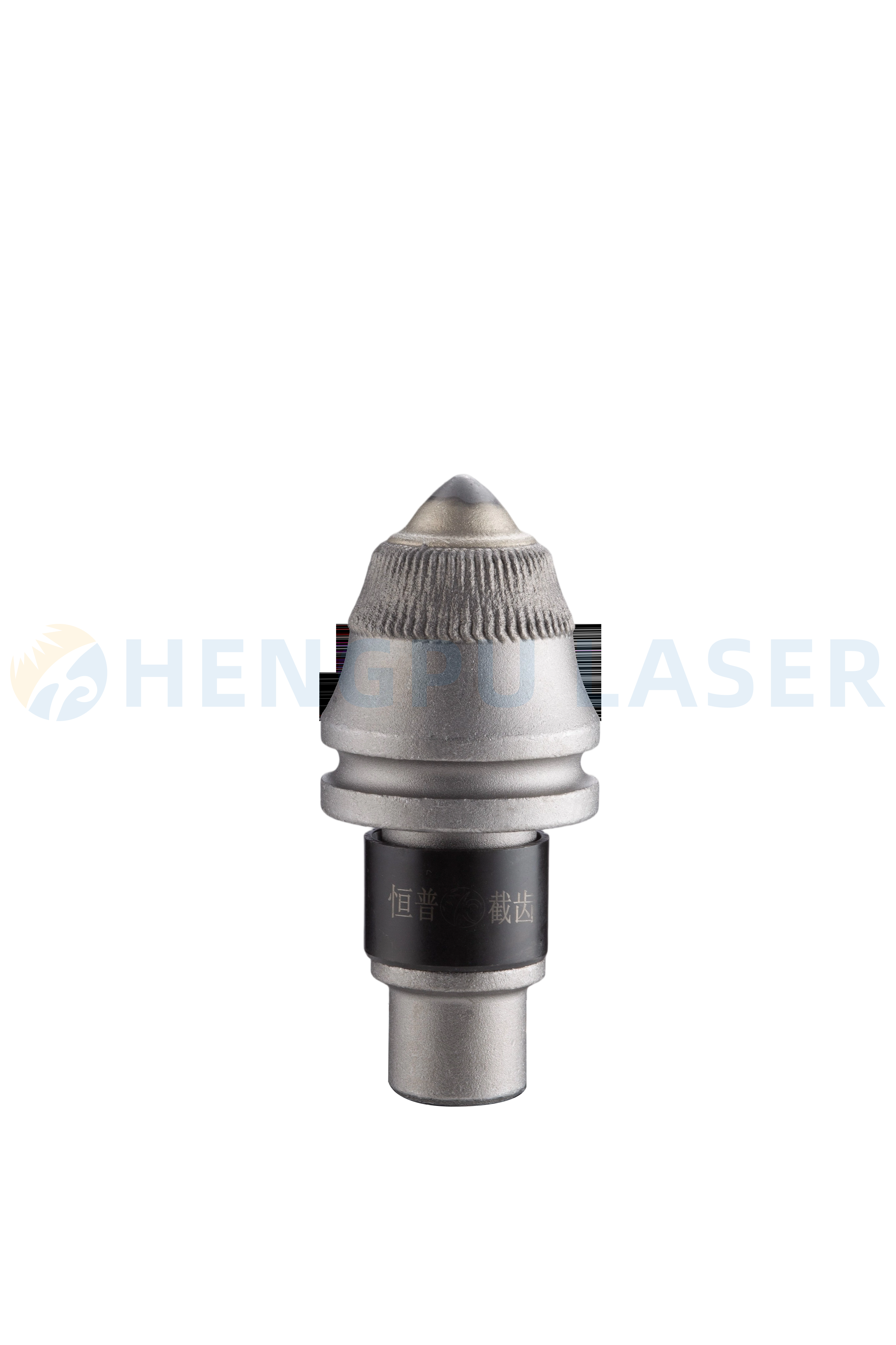
Rotary excavator picks are used on drilling equipment for bored pile and foundation construction applications.
The importance of rotary excavator picks becomes more obvious when foundation work is viewed as a repeated cycle.
Total drilling time = number of piles × average drilling-cycle time + unplanned delays
The first part of this formula is controlled by equipment capacity and site planning. The second part is often affected by unexpected tool problems, difficult ground, or interruptions during drilling.
If a pick becomes damaged or loses its cutting ability, the operator may need to:
Reduce drilling speed
Increase machine pressure
Lift the drilling tool for inspection
Replace damaged picks
Check the holder or cutting head
Repeat the affected drilling operation
One delay may have limited impact on a small project. On a large site, repeated interruptions can affect concrete placement, reinforcement installation, equipment scheduling, and subcontractor coordination.
This is why pick performance should be assessed by its effect on the complete drilling cycle, not only by its purchase price.
Rotary excavator picks affect several critical moments during foundation drilling.
| Drilling stage | Influence of the pick | Project consequence |
|---|---|---|
| Entry into the formation | Determines how quickly the tool begins cutting | Faster start to each drilling cycle |
| Hard-layer penetration | Transfers torque and pressure into resistant material | Less time lost at difficult strata |
| Material breakage | Controls the size and distribution of broken material | Smoother removal and fewer repeated passes |
| Tool recovery and inspection | Affects replacement frequency | More predictable equipment scheduling |
| Repeated pile production | Maintains consistent cutting behavior | Better output across the project |
The pick is therefore connected to both productivity and process stability.
A rotary drilling rig may encounter different materials at different depths. A typical pile hole can pass through loose soil before reaching gravel, weathered rock, or a stronger underlying formation. The tool must respond to these transitions without creating excessive loading or losing cutting effectiveness.
Three project demands make pick selection increasingly important.
As pile depth and diameter increase, the drilling tool spends more time inside the formation. The picks experience longer operating periods and repeated contact with material. Any reduction in cutting performance becomes more costly when multiplied across a deep-hole drilling operation.
A pick designed only for uniform soil may not perform well when cobbles or hard rock appear. Sudden changes in resistance can create impact loading, tool deflection, or uneven wear. The design must provide a suitable balance between penetration, toughness, and abrasion resistance.
Large infrastructure projects often involve several work teams and interconnected construction stages. If drilling progress slows, later activities may also be delayed. Reliable rotary picks help contractors maintain a more consistent production rhythm.
Rotary excavator picks should be matched to the actual formation instead of being selected only by drilling-rig model.
Hengpu Laser’s official product information lists rotary pick models for different working-condition ranges. For example, the HP3055 and HP3060 series include options listed for conditions from 0–50 MPa to above 150 MPa.
These ranges are reference points rather than a substitute for site evaluation. Rock type, abrasiveness, cobble content, drilling diameter, machine torque, and holder structure must also be considered.
| Example model | Listed working condition | Engineering consideration |
|---|---|---|
| HP3055-19TD | 0–50 MPa | Lower-strength soil or weathered formations |
| HP3055-22TD | 50–100 MPa | Medium-strength ground |
| HP3060-25TD | 100–150 MPa | Higher-strength formations |
| HP3060-30TD | Above 150 MPa | More demanding hard-ground applications |
A correct match helps the drilling head maintain effective contact with the formation. An incorrect match may cause slow penetration, excessive pressure, or premature tool damage.
More information is available in the official Rotary Excavator Picks product category.
A rotary pick cannot be evaluated separately from its mounting system.
The pick diameter, length, retaining ring, holder seat, and cutting-head arrangement determine how force is transferred during drilling. If the pick fits incorrectly or the holder has already been damaged, even a high-quality replacement may not perform as expected.
A stable installation helps the pick:
Maintain its intended cutting position
Transfer torque more evenly
Resist movement under impact
Reduce abnormal loading on the holder
Preserve the cutting-head arrangement
Before installing new picks, the holder should be checked for deformation, excessive wear, cracks, or blocked retaining components. This inspection is especially important when the previous picks showed uneven wear or repeated breakage.
Rotary excavator picks operate under pressure, impact, bending, and abrasion. Their performance depends on how the entire tool is designed rather than on one material characteristic.
A typical rotary pick includes:
A carbide alloy tip for penetration and abrasion resistance
A high-strength steel shank for impact and bending loads
A connection area designed to remain stable during repeated use
A retaining system matched to the drilling head
Optional wear-resistant treatment for demanding conditions
Hengpu Laser’s official rotary pick products combine tungsten carbide alloy tips with high-strength 42CrMo steel shanks and heat-treatment processes. Selected products also use laser-printed ceramic wear-resistant technology.
The objective is to balance hardness and toughness. Excessive hardness without sufficient toughness may increase the risk of cracking under irregular impact. A balanced design is more suitable for foundation sites where the material changes with depth.
The official foundation drilling pick product page provides additional model and application details.
The contribution of rotary excavator picks can be seen in several areas of foundation construction:
More consistent drilling output
Stable penetration helps the rig maintain a predictable working rhythm across multiple pile locations.
Lower frequency of tool changes
Improved wear resistance can reduce unnecessary interruptions when the pick remains suitable for the ground condition.
Less stress on connected components
A properly seated pick can help prevent abnormal loading on holders and the cutting head.
Better maintenance planning
When wear develops in a more predictable way, spare parts and labor can be arranged before an emergency stoppage occurs.
Improved cost visibility
Tracking pick consumption per drilling meter or per pile gives contractors a clearer view of actual tool-related costs.
A practical evaluation should compare rotary pick performance with project output.
| Indicator | Why it matters |
|---|---|
| Drilling time per pile | Shows the effect on the basic production cycle |
| Picks used per drilling meter | Measures actual tool consumption |
| Number of tool changes | Indicates maintenance interruption |
| Unplanned stoppage hours | Shows production loss caused by tool problems |
| Holder repair frequency | Reveals possible secondary damage |
| Performance by geological layer | Shows whether the pick matches the ground |
A pick with a low purchase price may not be economical if it causes repeated interruptions. Conversely, a higher-performance pick may reduce total project cost when it improves drilling continuity and equipment utilization.
Before ordering rotary excavator picks, contractors should provide:
Drilling-rig or milling-machine model
Existing pick model and dimensions
Holder diameter and retaining method
Required pile diameter and depth
Geological survey information
Rock strength and abrasiveness
Presence of gravel, cobbles, or hard inclusions
Daily operating hours
Previous pick wear or breakage problems
This information allows the supplier to recommend a solution based on the real foundation site rather than a general catalogue specification.
They are installed on rotary drilling equipment and related excavation tools to penetrate and break soil, gravel, weathered rock, and harder formations during foundation construction.
They influence the drilling speed, tool stability, maintenance frequency, and repeatability of each pile-drilling cycle.
No. The pick should match the drilling head, holder, ground strength, abrasiveness, impact level, pile dimensions, and equipment operating parameters.
Rotary excavator picks are becoming increasingly important in large-scale foundation engineering because they affect the repeatability of the entire bored pile construction process.
A suitable pick can help the drilling head penetrate difficult layers, maintain stable production, reduce unnecessary tool changes, and protect the holder and cutting assembly. These benefits become more significant as projects involve deeper piles, larger quantities, mixed formations, and tighter schedules.
The correct selection should be based on the complete working system: drilling equipment, pick dimensions, holder structure, geological conditions, and project production targets. When these factors are evaluated together, rotary excavator picks can contribute to more predictable drilling performance and better control of foundation construction costs.


