


Views: 0 Author: Site Editor Publish Time: 2026-07-23 Origin: Site


Road milling is a high-load operation in which hundreds of cutting tools repeatedly contact asphalt, aggregate, concrete, and other abrasive materials. During this process, Road Milling Bits must penetrate the pavement, break the surface into manageable particles, and maintain stable cutting performance over long operating periods.
One factor that strongly affects their service life is often overlooked: proper pick rotation.
Most round-shank road milling bits are designed to rotate gradually inside their toolholders. This movement distributes wear around the carbide tip and steel body. When a bit rotates correctly, it usually maintains a more symmetrical shape, cuts more efficiently, and lasts longer. When rotation becomes restricted, wear concentrates on one side, increasing the risk of flat spots, carbide damage, holder wear, vibration, and premature replacement.
Understanding why rotation matters can help contractors improve milling quality, reduce tool consumption, and avoid unnecessary machine downtime.
Road milling bits are installed in toolholders positioned around the milling drum. As the drum rotates, each bit repeatedly enters and leaves the pavement surface.
The cutting force is not applied perfectly through the center of the bit. The angle of installation, friction against the pavement, and changing cutting resistance create forces that encourage the round-shank bit to rotate inside the holder.
This rotation is usually gradual rather than fast or continuous. Its purpose is to expose different sides of the carbide tip and steel body to the working material.
A correctly rotating bit develops relatively even circumferential wear. This helps preserve the original cutting profile and prevents one side of the tool from carrying the entire load.
However, rotation depends on several conditions:
Correct clearance between the bit shank and holder
A clean holder bore
Proper installation
A suitable retaining system
Sufficient lubrication where required
Limited corrosion and contamination
A holder that has not become distorted or excessively worn
If any of these conditions are poor, the bit may become partially or completely locked.
The carbide tip is the main cutting component of a road milling bit. It must resist abrasion while penetrating asphalt and hard aggregate.
Without rotation, the same side of the carbide repeatedly contacts the pavement. This produces an uneven wear pattern, often creating a flat surface on one side of the tip.
As the flat area grows, the bit becomes less effective at entering the pavement. Cutting resistance increases, and the machine must use more force to remove the same amount of material.
Proper rotation distributes contact across the tip. Instead of allowing one side to wear rapidly, the tool uses more of the available carbide surface.
This can provide several benefits:
More uniform tip geometry
Better use of the carbide material
More stable pavement penetration
Lower risk of localized overheating
Reduced probability of side chipping
Longer usable tool life
For this reason, rotation is closely connected to both wear resistance and cutting efficiency.
The geometry of Road Milling Bits directly affects the performance of the milling drum.
A properly shaped tip concentrates cutting force into a relatively small contact area. This allows the bit to penetrate the pavement efficiently and fracture the material.
When a bit stops rotating, one-sided wear changes the tip profile. The tool may become blunt, flattened, or asymmetrical. Instead of cutting cleanly, it may begin to scrape or crush the surface.
This can lead to:
Higher cutting resistance
Increased fuel consumption
Reduced milling speed
Irregular surface texture
Larger or inconsistent milled particles
Greater stress on the milling drum
Maintaining proper rotation helps the bit retain a more balanced shape for a longer period. Although all milling tools eventually wear, evenly worn tools generally provide more predictable performance than bits with severe one-sided damage.
Uneven wear does more than reduce cutting efficiency. It can also increase mechanical stress.
When one side of the carbide becomes heavily worn, the force acting on the tip becomes unbalanced. The bit may experience stronger bending and side loads each time it contacts the pavement.
These concentrated loads can contribute to:
Carbide chipping
Cracking near the carbide base
Carbide separation
Steel-body deformation
Shank damage
Retaining-ring failure
Hard aggregate or embedded metal can create sudden impact loads. A correctly rotating and evenly worn bit is generally better able to distribute these forces. A locked bit with an irregular profile is more likely to receive repeated impact on the same weakened area.
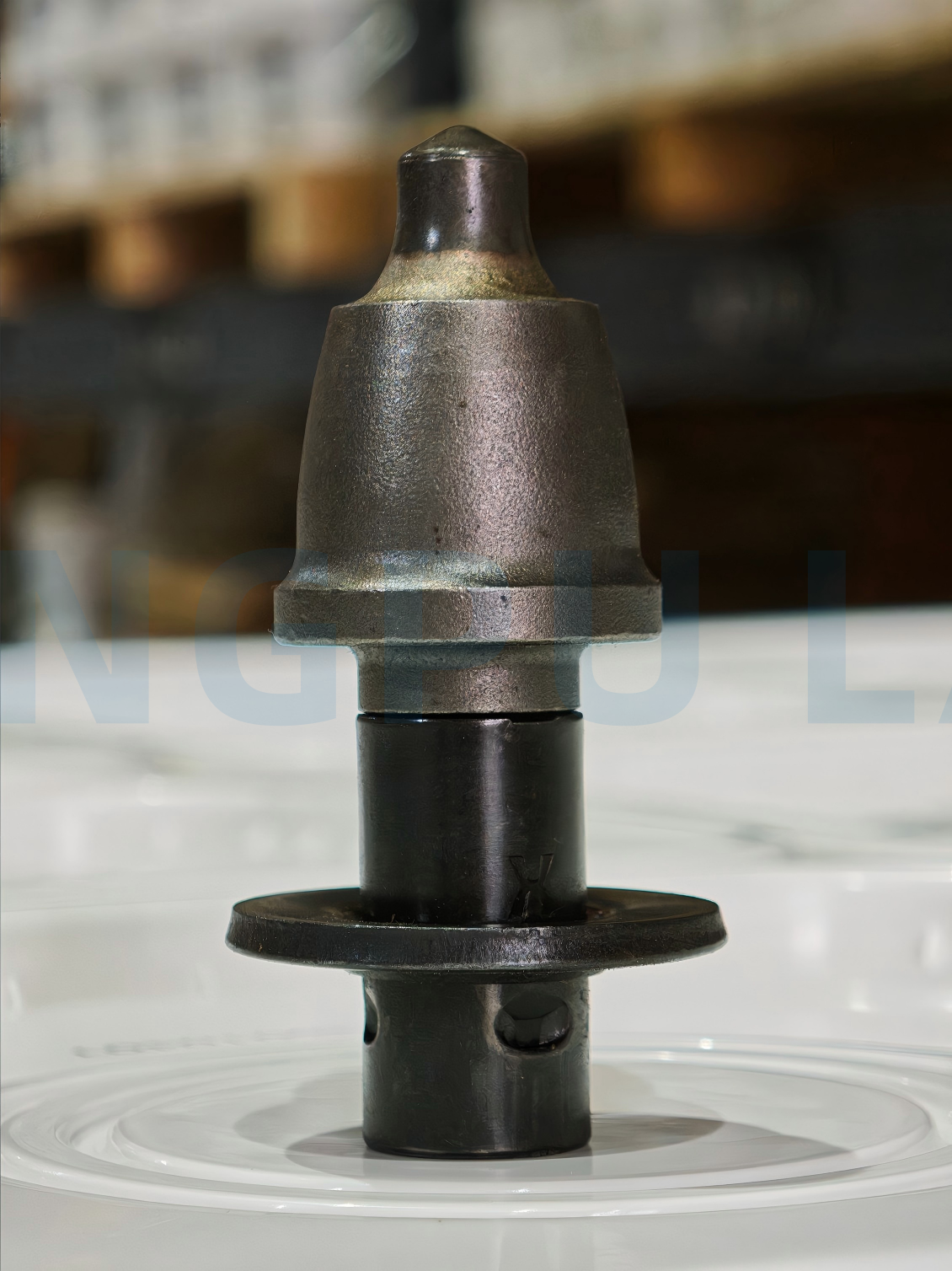
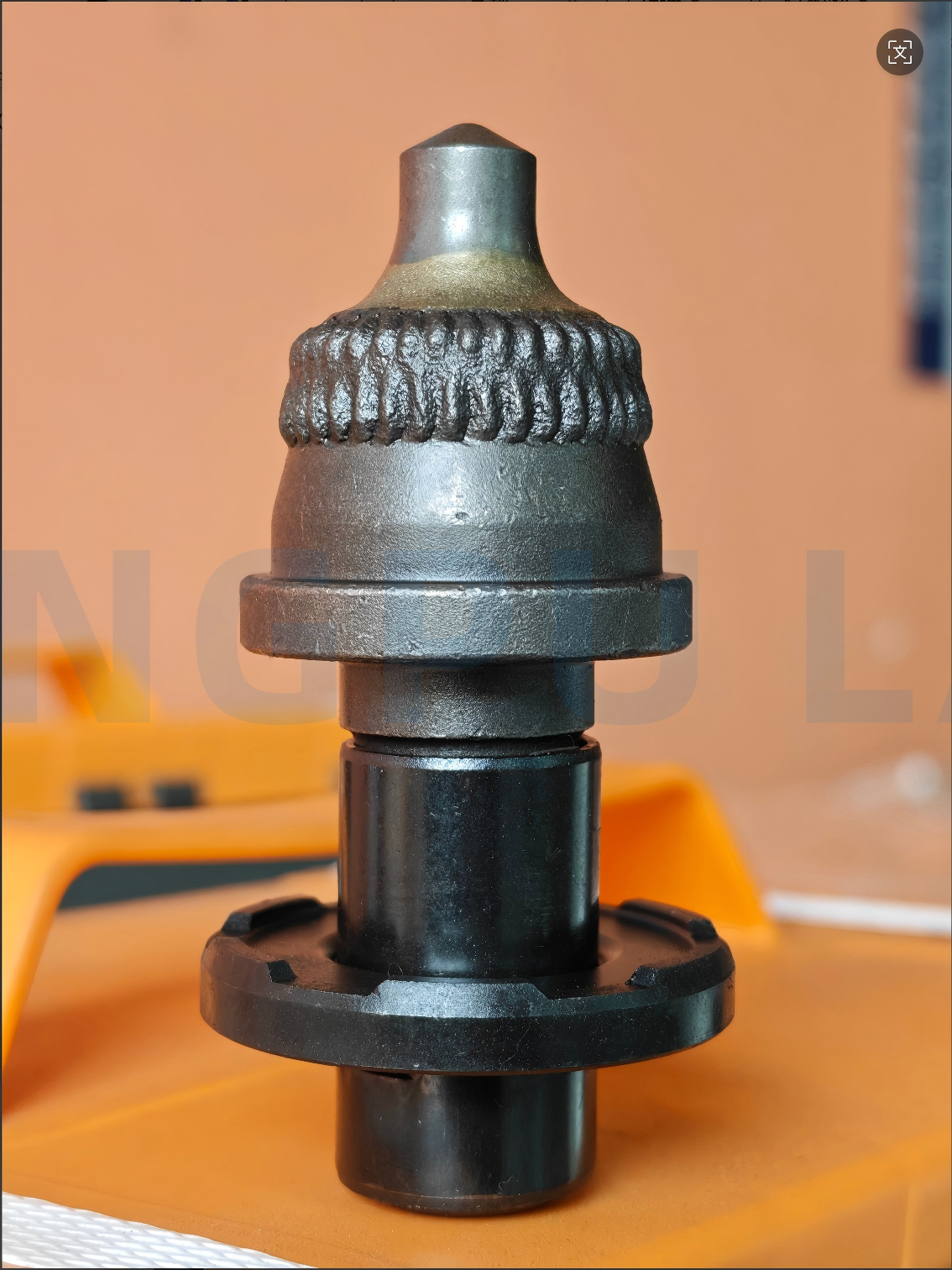
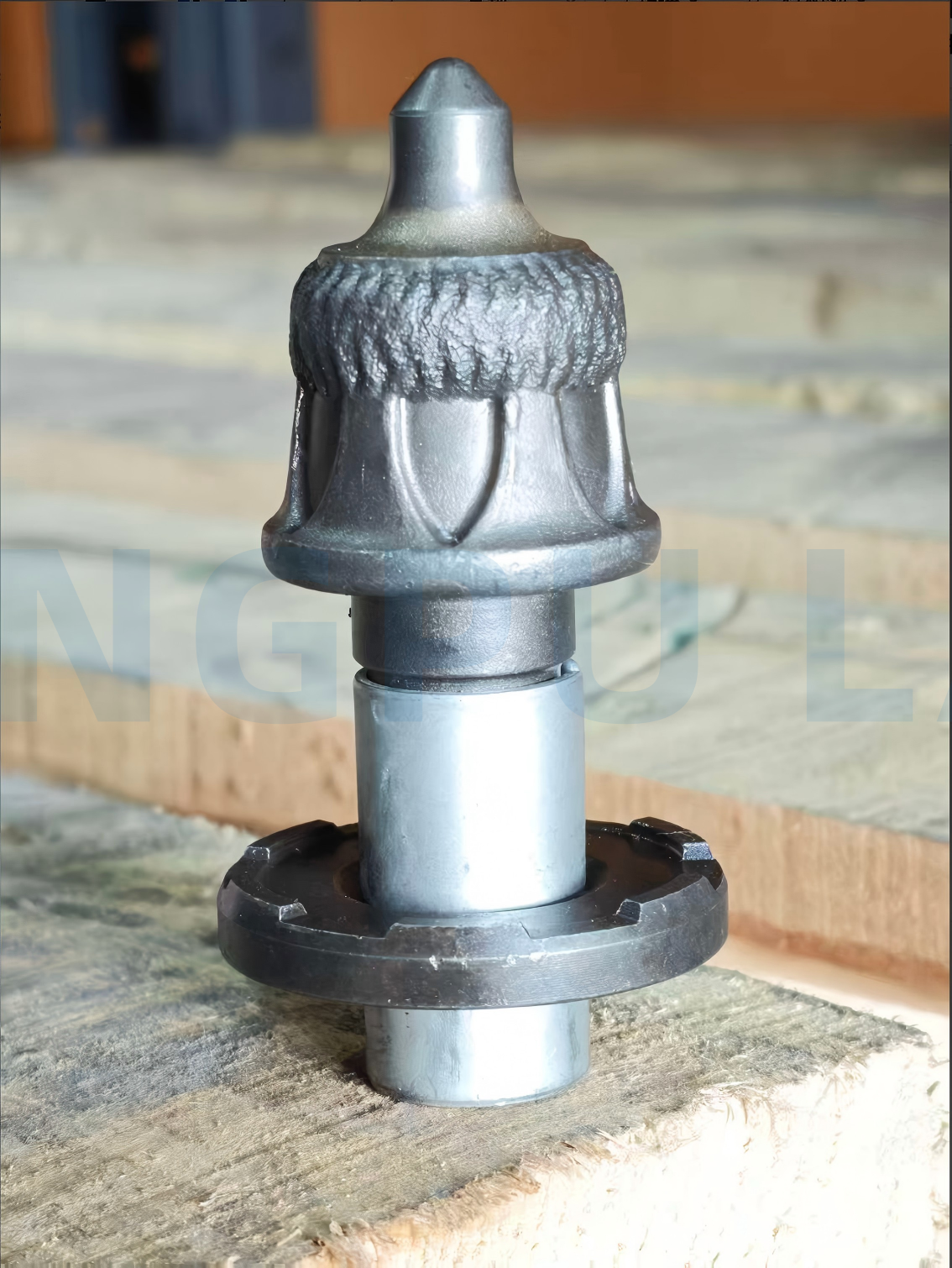
Hengpu Laser designs its Road Milling Bits by considering carbide toughness, steel-body support, tip geometry, and wear protection together. This integrated approach helps the tool resist both gradual abrasion and sudden mechanical loading.
Although the carbide tip performs most of the cutting work, the steel body also contacts milled material and loose particles.
If a bit cannot rotate, abrasive material repeatedly attacks the same side of the steel body. A deep wear groove may develop behind or around the carbide tip.
As the surrounding steel wears away, the carbide receives less structural support. The exposed carbide then behaves like a longer unsupported section, increasing the risk of bending stress and fracture.
Hengpu Laser uses high-strength alloy steel and controlled heat treatment to improve the durability of the pick body. The company also applies advanced laser and metal-ceramic composite technologies to reinforce critical wear areas.
These wear-resistant structures help slow steel-body loss and preserve support around the carbide tip. However, even advanced materials perform best when the bit is allowed to rotate as designed. Material technology and correct machine maintenance should work together rather than being treated as separate issues.
 |  |  |
A locked road milling bit can also damage the toolholder.
When the bit rotates normally, wear is distributed around the shank and holder bore. When it remains fixed, vibration and cutting forces repeatedly act in the same direction.
Over time, this may cause:
Uneven holder-bore wear
Oval or enlarged holder openings
Shank seizure
Retaining-system damage
Incorrect bit positioning
Increased movement between the bit and holder
Once the holder becomes damaged, installing a new bit may not solve the problem. The replacement tool may also rotate incorrectly or receive uneven loads.
Operators should therefore inspect both the bit and holder. Repeated abnormal wear in the same drum position often indicates that the holder, retaining system, or installation condition needs attention.
Several visible signs can indicate that Road Milling Bits are not rotating correctly.
A flat or heavily worn surface on one side of the carbide is one of the clearest signs.
Deep grooves, polished areas, or severe material loss on one side of the body may indicate restricted movement.
If the same mark on the bit remains in the same position after operation, the bit may not be rotating.
Localized heating may result from high friction and repeated contact on one area.
A bit that is seized inside the holder may require excessive force during replacement.
If bits repeatedly fail at the same location on the milling drum, the holder or installation angle may be damaged.
Routine inspection allows these problems to be corrected before they cause broader tool or machine damage.
Good maintenance practices can support reliable bit movement.
Operators should:
Clean holder bores before installing new bits
Remove compacted asphalt, dust, and corrosion
Inspect retaining rings and sleeves
Replace damaged or severely worn holders
Confirm that the bit size matches the holder
Check bits regularly during operation
Replace locked, fractured, or missing tools promptly
Avoid operating with incomplete tool coverage
A missing bit transfers additional load to neighboring tools. These adjacent bits may then wear faster or stop rotating because of abnormal force distribution.
Using consistent, correctly matched tools across the milling drum also helps maintain balanced cutting performance.
Proper rotation cannot compensate for poor product quality. Reliable milling performance requires suitable carbide, strong steel, accurate dimensions, consistent brazing, and a well-matched shank design.
Hengpu Laser manufactures Road Milling Bits for demanding pavement-removal applications. Its product development combines tungsten carbide selection, heat-treated alloy steel, precision manufacturing, wear-resistant reinforcement, and quality inspection.
Different pavement conditions may require different carbide geometries or material combinations. Asphalt containing highly abrasive aggregate may require stronger wear protection, while concrete or impact-intensive applications may require greater carbide toughness.
Hengpu Laser can evaluate pavement composition, machine type, milling depth, drum speed, and typical tool-failure patterns to recommend suitable products. Customized cutting solutions are also available for customers facing unusual wear, fracture, or rotation problems.
Proper pick rotation is essential because it distributes wear, preserves carbide geometry, protects the steel body, reduces fracture risk, and limits damage to the toolholder.
A rotating bit generally provides more stable cutting performance than a locked bit suffering from one-sided wear. However, effective rotation depends on correct installation, clean holders, suitable retaining components, regular inspection, and reliable tool dimensions.
Hengpu Laser combines advanced carbide materials, alloy-steel bodies, laser-based wear-resistant technology, and application-specific product design to produce Road Milling Bits for demanding road construction and maintenance projects.
By selecting appropriate milling tools and maintaining proper pick rotation, contractors can extend tool life, improve surface quality, reduce replacement frequency, and keep milling equipment operating more efficiently.
Contact us today to receive professional product recommendations and customized wear-resistant solutions for your application.


