


Views: 0 Author: Site Editor Publish Time: 2026-08-05 Origin: Site


Carbide cutting tools are usually evaluated by visible performance: how quickly they penetrate material, how long the tip lasts, whether the edge chips, and how often the machine must stop for replacement. Behind those results is a raw-material chain that begins far from the jobsite. Tungsten ore must be mined, concentrated, chemically processed, converted into tungsten powder, combined with carbon, and manufactured into cemented carbide before it becomes the working tip of a cutting pick or another wear-resistant tool.
Because global tungsten production is highly concentrated, changes in mine output, trade policy, energy costs, inventories, and downstream demand can influence raw-material pricing and supply conditions. On February 4, 2025, China introduced export controls requiring licenses for specified tungsten-related materials, including ammonium paratungstate, tungsten oxides, certain tungsten carbide materials, and selected forms of solid tungsten. However, the measures do not constitute a general export ban, and finished products such as sintered cemented carbide, carbide drill bits, and cutting inserts are generally outside the scope of these specific controls. Even so, changes affecting upstream tungsten materials may create additional compliance requirements, procurement uncertainty, or lead-time pressure within the broader carbide supply chain. For buyers of carbide cutting tools, this makes material traceability, supplier stability, inventory planning, and manufacturing capability increasingly important.
Most cemented carbide used in heavy cutting applications consists primarily of tungsten carbide grains held together by a metallic binder, commonly cobalt. The carbide phase provides high hardness and resistance to abrasive wear, while the binder contributes toughness and helps the material withstand repeated loading. By adjusting grain size, binder content, and manufacturing conditions, producers can create grades suited to different combinations of abrasion, compression, and impact.
This balance explains why tungsten carbide is used in mining picks, road milling bits, foundation drilling tools, dies, nozzles, and many other industrial components. Ordinary steel may provide the structural body, but the carbide tip performs the most severe cutting work. A change in carbide quality can therefore alter penetration, edge stability, wear rate, and the risk of premature failure.
When tungsten prices rise, the carbide tip becomes more expensive to produce. However, the relationship between raw material cost and finished tool price is not one-to-one. The final cost also includes powder preparation, pressing, sintering, grinding, steel machining, heat treatment, brazing, surface protection, inspection, packaging, and logistics. Tip size and carbide grade also influence how much tungsten is contained in each tool.
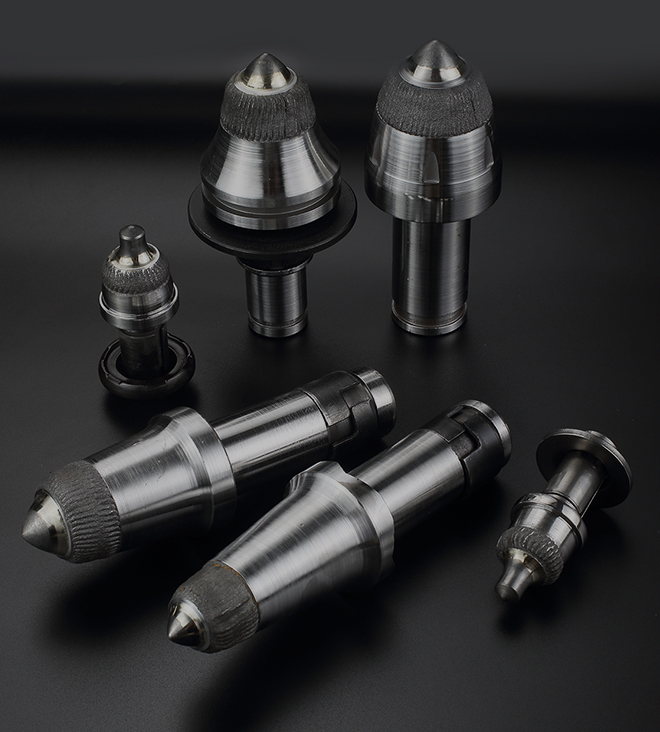
Global tungsten supply has long been dominated by a limited number of producing and processing countries. This concentration creates efficiency because expertise and industrial capacity are established, but it also increases exposure to policy changes, transport interruptions, energy constraints, and regional demand shifts. Tungsten is treated as a critical raw material in several major markets because of its importance to manufacturing and the difficulty of replacing it in many high-performance applications.
Export licensing does not automatically stop trade, and controls are not the same as a complete export ban. Nevertheless, additional documentation and review can affect transaction timing. Importers, distributors, and tool manufacturers may need to plan further ahead, communicate specifications more clearly, and maintain better visibility over inventory and shipment status.
Sudden low quotations should be examined carefully during a rising market. They may reflect older inventory or an efficient production structure, but they can also indicate a smaller tip, a changed grade, less binder control, reclaimed material with uncertain consistency, or reduced inspection. Buyers should confirm whether the quoted specification is truly equivalent rather than comparing names alone.
Used carbide contains valuable tungsten and can be collected, processed, and returned to the material cycle. Recycling reduces dependence on newly mined feedstock and can provide an important secondary source of supply. For tool users, organized scrap collection may also recover value from worn picks, inserts, and other carbide components that would otherwise be discarded with general metal waste.
When tungsten becomes more expensive or difficult to source, an unsophisticated response is to reduce carbide mass. A better engineering response is to optimize the grade and geometry for the actual wear mechanism. A fine-grain, high-hardness grade may suit abrasive conditions, while a tougher grade with different binder content may be needed for interrupted cutting and impact. Tip profile can concentrate cutting force, improve chip formation, or reinforce vulnerable edges.
Manufacturers can also improve the steel body so the carbide remains supported for longer. If the body washes away around the tip, expensive carbide may be lost before it is fully consumed. Correct steel selection, heat treatment, brazing, and localized wear protection therefore help extract more working life from the carbide already present.
A carbide cutting tool is not only a piece of hard material. It is a system of carbide, binder, braze, steel, geometry, and fit. Poor concentricity can cause uneven loading. Incorrect holder fit can prevent rotation or create vibration. Excessive brazing temperature can damage the carbide or joint. Inadequate body hardness can lead to deformation, while an excessively brittle body can crack under shock.
Supply pressure can encourage substitution, but substitution is difficult to detect when purchase specifications for Cutting Picks are limited to a product name or machine model. Two tools may fit the same holder while differing in tip dimensions, carbide grade, steel composition, heat treatment, or brazing quality. They may look similar before use but perform very differently in abrasive or impact conditions.
A stronger specification identifies the application, formation or work material, machine interface, critical dimensions, preferred tip geometry, and expected operating conditions. Buyers can also request hardness records, dimensional inspection, batch identification, and controlled field samples. Clear specifications protect both parties by reducing misunderstandings and allowing the manufacturer to recommend a suitable design.
Procurement teams should track average consumption, peak project demand, supplier lead time, transit time, and the cost of a machine stoppage. Safety stock should reflect operational risk rather than an arbitrary quantity. A distributor serving several industries may need a core inventory of common sizes plus a planned replenishment schedule for specialized tools.
Long-term blanket orders or scheduled releases can improve visibility for both buyer and manufacturer. They allow raw materials and production capacity to be reserved without requiring the customer to receive the entire volume at once. This approach can be more practical than emergency purchasing after stock has already fallen to a critical level.
Unit price remains important, especially when carbide content is costly, but it should be linked to output. Mining operations may compare cost per tonne, road contractors may compare cost per square meter or operating hour, and foundation contractors may compare cost per drilled meter. Replacement labor, machine downtime, holder damage, fuel or power consumption, and production stability should be included where possible.
A tool that costs more but lasts longer is not always the winner; it must also cut effectively. Likewise, a low-cost tool is not economical if it slows production or fails unpredictably. Field data provides the most reliable basis for balancing acquisition cost and operating value.
During stable periods, buyers can qualify alternative grades, confirm compatible dimensions, and conduct controlled trials. Waiting until supply is disrupted leaves little time for validation. Regular communication about project schedules and forecast demand helps manufacturers plan carbide purchasing, production slots, and logistics.
Tungsten supply concentration, trade controls, recycling initiatives, and price volatility are likely to remain part of the carbide tool market. These pressures will reward manufacturers that can control material use without sacrificing performance and buyers that evaluate tools by life-cycle value. The most effective response is not indiscriminate cost cutting. It is closer alignment between carbide grade, tip geometry, steel support, application conditions, and procurement planning.
Hengpu Laser applies materials engineering, precision manufacturing, and ceramic 3D-printing technology to carbide-tipped tools for mining, road construction, tunneling, foundation drilling, and other high-wear applications. The company works with customers to match tool structure and wear protection to operating conditions, helping reduce premature carbide loss and improve the practical value delivered by each cutting tool.
As tungsten supply conditions continue to influence carbide material costs and availability, buyers need to pay closer attention to tool quality, material utilization, service life, and supply stability. Hengpu Laser supports customers with durable carbide cutting tools and wear-resistant solutions designed for mining, road construction, and heavy-duty engineering applications. Contact us today to discuss your purchasing requirements and receive practical recommendations for selecting reliable carbide cutting tools under changing market conditions.


